Tag Archives: Greece

Some thoughts about Reed’s humanities course

Louis MacNeice, Autumn Journal Part IX (1939)

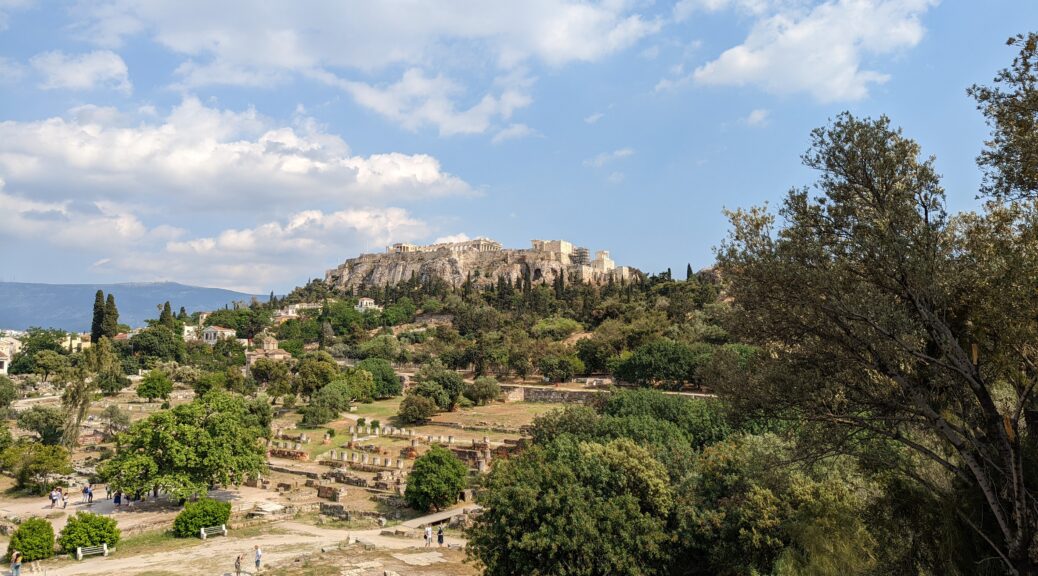
The Glory that was Greece: put it in a syllabus, grade it
Page by page
To train the mind or even to point a moral
For the present age:
Models of logic and lucidity, dignity, sanity,
The golden mean between opposing ills…
But I can do nothing so useful or so simple;
These dead are dead
And when I should remember the paragons of Hellas
I think instead
Of the crooks, the adventurers, the opportunists,
The careless athletes and the fancy boys,
The hair-splitters, the pedants, the hard-boiled sceptics
And the Agora and the noise
Of the demagogues and the quacks; and the women pouring
Libations over graves
And the trimmers at Delphi and the dummies at Sparta and lastly
I think of the slaves.
And how one can imagine oneself among them
I do not know;
It was all so unimaginably different
And all so long ago.

Some may have seen the article on the Society for Classical Studies blog about the the controversy over HUM110 at Reed College, in which I was quoted. I gave the author of that post, Sarah Bond, a lot more than she could reasonably print, so I thought that I would include some of those (scattered, half-digested) thoughts here on my own blog. I should say that a lot of my thinking has been shaped by the response of the students in my “Modern Issues, Ancient Times” class on race and antiquity.

On the one hand, there are the Reedies Against Racism who accuse the course of being “too white, too male and too Eurocentric”; on the other, we have the riposte of Prof. Jay Dickson, who is quoted as saying, “The idea that Hum 110 is a ‘white’ course is very strange to me. It presupposes that our contemporary racial categories are timeless.”

Of course Prof. Dickson is right. Greeks and Romans didn’t think of themselves as white or even as particularly European. On the other hand, it seems to me disingenuous (or at the very least, uncharitable) to interpret the students’ objections in this way. I think it’s clear that the students are referring to the reception of Classical texts: not only the way that Classics has been taught, as the starting point of European history (that is how I learned it in my AP class), but also the way that Classics was used by early modern and modern European and American race theorists and race scientists.

I don’t think that Classicists can have our cake and eat it too. That is, we can’t require students to read Greek and Roman texts on the premise that they are foundational to Western/European civilization/thought and then conveniently forget what this has actually meant in historical terms. The establishment of these texts as foundational has, in the past couple of centuries, been premised on a Eurocentric project. (And it would also be irresponsible to forget that some of these texts have horrific content, like Aristotle’s defense of slavery.)

It also seems weird to me that an Introduction to the Humanities course would contain no material written in the past 2000 years. That’s not an introduction to the humanities; it’s a Great Books of Ancient Literature class with an “introduction to the humanities” label affixed. Personally, I would expect an introduction to the humanities to start with a text like the Odyssey and follow the thread through Euripides, Pound, Joyce, Walcott, and maybe Wallace and Atwood. It’s unsurprising to me that the students saw through this mismatch.

We could get out of this bind by claiming, with Bernard Knox, that “The primacy of the Greeks in the canon of Western literature is neither an accident nor the result of a decision imposed by higher authority; it is simply a reflection of the intrinsic worth of the material, its sheer originality and brilliance” (The Oldest Dead White European Males, p. 21). Although I think that Greek literature is really, really great, where I would part company with Knox is the idea that this justifies its primacy, since the very idea of having a meaningful comparison between world literatures seems like a joke. I’d rather debate LeBron vs. MJ.

My main observation, then, is that Classics has a problem. We lean on the Western Civilization narrative in lots of ways, but we can’t benefit from it then refuse the parts of that narrative that we don’t like. Or rather, we can, but we should expect our students to call bullshit. The solution, I think, isn’t to ignore the problem, but to make an argument to students that the ancient Mediterranean is inherently interesting (not superior). That means listening to students and responding to them in a serious way.

In fact, students are already very interested in the material. We don’t have to water down the syllabus, just refashion it. My students learned an enormous amount about antiquity in my class, through a different lens than any I had previously used. They were extremely curious about the ancient world. A common question was, “Why were we never taught this?” They are not, on the other hand, very interested in taking Dead White Guys 101. Nor am I in teaching it.
Field archaeology & sexual harassment

Field archaeology has a sexual harassment problem. Everybody knows this, at least anecdotally; we’ve all seen, experienced, and/or heard about it. It’s especially problematic in a field that is numerically dominated by women but where many of the directorial staff are men. It’s scandalous that this is the case, and it’s scandalous that our institutions seem to be doing nothing about it.

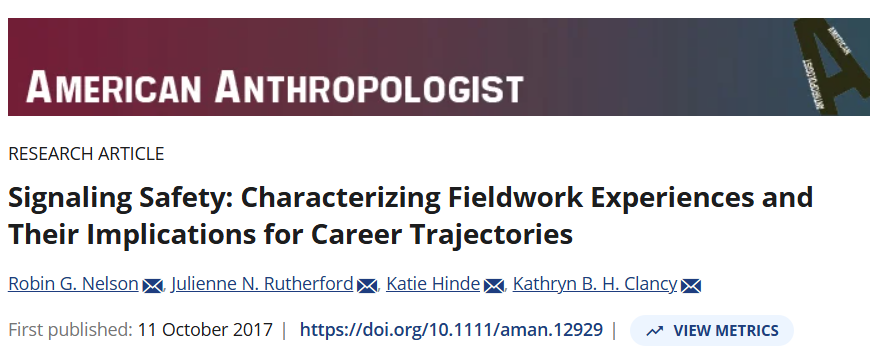
A recent article in American Anthropologist about this problem, “Signaling Safety: Characterizing Fieldwork Experiences and Their Implications for Career Trajectories,” suggests some ways forward. They find that sexual harassment and assault are systemic problems in fieldwork (not specifically, but including, archaeological fieldwork) and that these behaviors hurt women in a variety of ways, including their careers. That’s not surprising. What is useful is their finding that clear rules and consequences are clearly associated with healthier projects. That is to say, on such projects

field directors and researchers participated in explicit conversations, training, or meetings to establish site-specific policies. Senior researchers engaged in implicit modeling of these rules to other field researchers and often made themselves available for discussion. There was also evidence that the rules at these sites were enforced with observable consequences. In one specific example, the sexual harassment of a peer resulted in the perpetrator being asked to leave the fieldsite.

The other major, related, finding was that good projects

were fair and/or egalitarian in execution, living and working conditions were intentional and safe, and directors anticipated problems and created avenues for conversations or reporting. Respondents who described these experiences highlighted the importance of having women in leadership roles at their sites, particularly if the rest of the site leadership valued those women’s roles.

My own experiences tally with these findings, especially when it comes to the project that I co-direct. I wish that this article had come out before we started our project, because it would have changed the way I did some things – I would have been much more explicit about our policies on sexual harassment, for instance – but most of them were things that we did on our project. The negative findings also tally with my experiences and what I’ve heard about bad projects.

The big problem here, from my perspective, is that projects are not held to account by the institutions that regulate archaeological field work. The Archaeological Institute of America’s Code of Professional Standards says that archaeologists shouldn’t harass or discriminate, but that has no teeth. The American School of Classical Studies at Athens requires an application for a field permit to include statements about research questions, methods and techniques, site conservation, a budget, etc. but nowhere is anything said about policies to enforce issues arising from discrimination and harassment. The same is true for the Canadian Institute in Greece. Searches for “harass” and “harassment” on their websites yield nothing about policies about sexual harassment.

This is unsatisfactory, because as many of us know, the worst offenders can be the project directors themselves. It doesn’t help that although women are probably the majority of all field projects, they are severely underrepresented among directorial staff. (And this criticism is true of my own project: men outnumber women on the directorial staff, but virtually all of our supervisors are women and most of our students were).

I don’t think that we can claim, in the face of all the evidence, that this is simply a question of a few bad eggs. This is a systemic problem and it requires a systemic solution.

My suggestion would be that applications for field permits in Greece should be required to include policies that govern discrimination and harassment. If they refuse to include such policies, their request should be denied. Participants need to be made aware of these policies, and that they may report violations to the Director of the American School or the Canadian Institute (and to the relevant fieldwork committees), since we know what happens when such problems are dealt with internally. This is a serious problem, and we need to deal with it seriously.

Big book, big evil

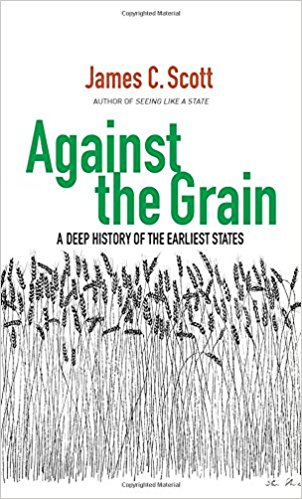
When James Scott publishes a book, I buy it; I’ve learned a lot from his earlier work, especially Domination and the Arts of Resistance (Yale, 1990) and Seeing Like a State (Yale, 1997), and I’ve also learned a lot from the critical responses to these works (like this 1990 article in American Ethnologist by Lila Abu-Lughod). Scott’s most recent book is entitled Against the Grain: A Deep History of the Earliest States (Yale, 2017), and I was excited to get it, because most of my research is also about early states, albeit a small group of early states that are, in the grand scheme of things, small potatoes. Nevertheless, I was happy to see in the index that my little corner of archaeology is mentioned in the book. This is what Scott has to say about the Mycenaeans, in the context of a general discussion about states whose inhabitants “voted with their feet”:

As the state was weakened and under threat, the temptation was to press harder on the core to make good the losses which then risked further defections in a vicious cycle. A scenario of this kind, it appears, was partly to blame for the collapse of the Cretan and Mycenaean centralized palatial state (circa 1,100 BCE). “Under bureaucratic pressure to increase yield, the peasantry would despair and move away to fend for themselves, leaving the palace-dominated territory depopulated, much as the archaeological evidence suggests,” Cunliffe writes. “Collapse would follow quickly.”

Cunliffe is the eminent archaeologist Sir Barry Cunliffe, and in a footnote Scott cites Cunliffe’s Europe Between the Oceans, 9000 BC-AD 1000 (Yale, 2008), p. 238. In that four-page (!!!) section of his book, Cunliffe explains the “collapse” of the polities of the eastern Mediterranean circa 1200 BC as a systems collapse. Cunliffe doesn’t use footnotes, but in his “Further Reading” for this section, he cites for the Aegean N.K. Sandars’ The Sea Peoples: Warriors of the Ancient Mediterranean (London 1978), and for the Levantine coast, a 1987 article by Mario Liverani, and a 1995 article by L.E. Stager.

Okay, so there are lots of problems here:

  1. The was no “Cretan and Mycenaean centralized palatial state,” but a patchwork of small, independent states (most all Aegean prehistorians agree, but there is a minority of dissenting voices).
  2. These states didn’t collapse circa 1100 BCE, but circa 1200 BCE.
  3. There is zero evidence that Mycenaean states pressed the core harder to make good on losses which risked further defections. One can posit such a scenario for the Mycenaean world, it is true, and people have posited something similar (such as Sigrid Deger-Jalkotzy in the Cambridge Companion to the Aegean Bronze Age [2008]). But these are scenarios that have been developed not from empirical evidence, but as general hypotheses that might explain the “collapse.” Some evidence is consistent with this scenario, but I wouldn’t say that the majority of Aegean prehistorians would agree with Scott’s statement. The fact is, our evidence for how hard the palaces pushed their populations is primarily textual, and we don’t have the time depth to understand how hard the population was being pushed (relatively). Absolutely, most people would agree with Oliver Dickinson that “The view that the palaces’ tax demands and forced labour on their construction projects bore heavily on their subjects requires better demonstration than has so far been offered.” (The Aegean from Bronze Age to Iron Age, p. 41).
  4. If you want to talk about the collapse of the Mycenaean palaces, you do not cite Barry Cunliffe, unless you are in some kind of contractual obligation to cite only books published by Yale University Press (this is meant as a joke, but honestly I can’t for the life of me figure out why Cunliffe is cited here otherwise). Barry Cunliffe is an eminent archaeologist, but as our undergraduates all know by the time they’re done taking our courses, some sources are better than others, and a coffee-table book that covers nine millennia in 478 pages without any footnotes is not authoritative. Cunliffe himself, I imagine, would not be comfortable with his book being used in this way (in his preface he apologizes for his selectivity). Cunliffe is not an expert in Mediterranean prehistory, either; his main interests are European archaeology in the 1st millennia BC and AD. And this is illustrated by the fact that Cunliffe’s authoritative source is a book that is a classic that is, however, very much out of date. This isn’t a knock on Cunliffe; his work is generally very good. But it is also general, and I wouldn’t be happy if an undergraduate in my Aegean Bronze Age class cited him on the causes for the Mycenaean palatial collapse. (For that, you should read Eric Cline’s 1177 BC [Princeton, 2014] as well as Oliver Dickinson’s The Aegean from Bronze Age to Iron Age [Routledge, 2006]).

Why am I so worked up about this? I’m not opposed to such big histories necessarily. Callimachus might have been; my title comes from his dictum μέγα βιβλίον μέγα κακόν, better translated “a big book is a great evil” (fr. 465 Pfeiffer), probably in a poetic context. But such books do need to be carefully researched and vetted by experts, especially if arguments are meant to be supported by historical and archaeological evidence.

I do think that it is important that Scott get these details right. It’s fine to theorize that many states collapsed because small losses were compounded by the center, pressing its core harder. I’m sure that this has happened in the past. But Scott’s claim here is that his theories have empirical backing. Otherwise there would be no point in invoking the Mycenaeans or citing Cunliffe; you could just assert it, probably with some adverb like “surely” or “no doubt” that would set off the BS alarm bells in my brain. But if you’re going to claim that your work is empirical, then you need to be right, or at least, you need to be up-to-date. Some day in the future I suppose Scott could be proved correct, but it’s hard to understand how that might be when he’s essentially relying on ideas about the Aegean Bronze Age from the 1970s. Looking at the pages where Scott talks about the Greek world, I see misunderstanding after misunderstanding.

At some point in the future, I’ll read all of this book. Scott is smart, and I’m sure that it will give me good ideas. But Scott is not an archaeologist: he’s trained as a political scientist. And I don’t see any evidence (from the stuff that I know) that he’s bothered to learn enough to know what he’s talking about. As political science, maybe it’s useful. As history, I fear that it is bunk.

On “the classical debt”

I was once describing to a non-archaeologist Hellenist colleague and friend how archaeology works in Greece. In the course of that discussion I mentioned in passing that the directors of regional archaeological offices are called “ephors” (Greek έφορος). “Really?” she asked, before exclaiming, “How cute!” I didn’t say anything, but privately I was annoyed at the remark. I guess that it is kind of neat for a Classicist, who naturally associates ephors with ancient Sparta… but is it really so remarkable that the word for “supervisor” in Greek (ancient) is also the word for “supervisor” in Greek (modern)?

There are two ways that I think about this little anecdote. They’re interconnected, and both have been stimulated by recent work by Johanna Hanink, an associate professor of Classics at Brown University. The first part is from an article in the journal Eidolon entitled “On not knowing (modern) Greek“, where she argues (in short) that “our discipline continues to take a colonialist view of, among other things, Greece, Greeks, and (Modern) Greek” and that “classicists trained in the “Western” classical tradition tend to disregard Modern Greek as a scholarly language.”

She’s absolutely right, of course. One little example: I almost lost my mind when, just two years ago, a new Journal of Greek Archaeology was announced with the following statement:

Announcing an international journal printing contributions in English, French, German, and Italian…. Work from Greek scholars is particularly welcome, but should be either translated into English or sent to us for English translation or assistance.

Yeesh. I saw that statement on July 22nd, 2015. On social media there was palpable anger about the policy’s neo-colonial implication (and much gallows humor too, of course). Through direct intervention on the part of more established scholars, with cooler heads than mine, the policy was changed (to English only! Huzzah?). Part of my irritation at my colleague’s off-hand comment was, to be sure, the implication that modern Greek was cute: just cute. It didn’t really count, as demonstrated by the fact that she, a specialist in ancient Greek, didn’t really have any acquaintance with the modern language.

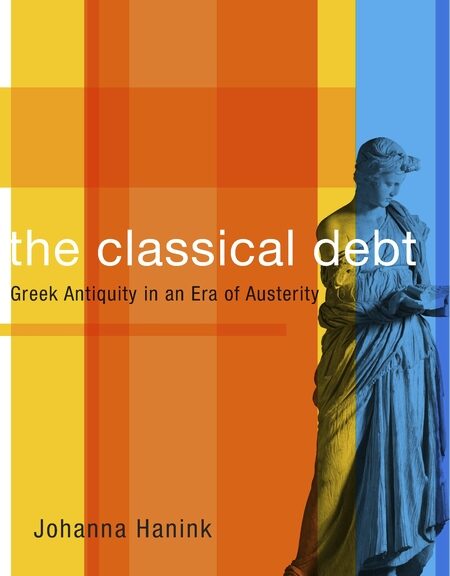
But this blog post was supposed to be about the second part of this: a book, The Classical Debt: Greek Antiquity in an Era of Austerity (Harvard University Press 2017), which I just finished last night. (There’s also a nice review in the WSJ by Alicia Stallings). This book pulls on a thread and traces it through time, that thread being the idea of the debt owed to Greece by the West because of the achievements of the Classical (senso latu) age – democracy, philosophy, and that – and especially how that idea has manifested itself and been reacted to since the economic crisis. In pulling on this thread, she deals with many interrelated issues, all dealing with the productive and strained relationships between Classical antiquity and modern Greece and the West. In the end, Hanink suggests that the debt ought to be understood as “a debt owed for the centuries of destruction that other people’s dreams of the ancient past have wrought.” It’s a really thoughtful, accessible, well-written book, and one that I’ve been recommending to anyone who will listen.

It’s also helped me to think about why the “cute” comment so rankled. As so many commentators have noted – including Hanink, who is very good on this – Greece is caught in a bind. Here’s how Michael Herzfeld describes it in Anthropology through the Looking-Glass (1987: 19):

the West supported the Greeks on the implicit understanding that the Greeks would reciprocally accept the role of living ancestors of European civilization – the standard, for most romantic writers, of civilization in the most general and absolute sense.

And yet the terms of this tacit agreement were unequal in the extreme. Whereas the Greeks sought genetic confirmation of their cultural destiny in the link with the ancient past, western observers, operating on the basis of a self-fulfilling prophecy, more often saw in it the evidence of Greek backwardness and “obsession.” The Greeks of today are still living out the consequences of that imbalance…

Or, maybe better, here’s Nikos Dimou (translation mine; cf. Hanink, p. 206):

Η σχέση μας με τους αρχαίους είναι μία πηγή του εθνικού πλέγματος κατωτερότητας. Η άλλη είναι η σύγκριση στο χώρο και όχι στο χρόνο. Με τους σύγχρονους «ανεπτυγμένους». Με την «Ευρώπη.»

Our relationship with the ancients is one source of the national inferiority complex. The other source is a comparison of space, rather than of time. With contemporary “developed” people. With “Europe.”

I’m sure that the title of έφορος for the head of a regional archaeological department was motivated by the word’s antiquity. It’s hard to imagine that it wasn’t, and that corresponds to the desire to forge the “link with the ancient past” that Herzfeld refers to. Indeed, early in the history of the Greek state, the creation of a purified Greek language (Katharevousa) was extremely important (this too is well-covered by Hanink). But this purified Greek wasn’t the same as ancient Greek; it was equally built up from modern European languages, especially French. And it was crucially important to the image of Greece, internally and externally. As Herzfeld writes (1987: 52):

Katharevousa would be the means of liberating the Greeks, not only from the cultural corruption that was the legacy of the Turkocracy, but also from the shackles of their humiliatingly dependent status in the European community.

This linguistic link to antiquity, then, well illustrates the bind of being Greek. “Cute,” then, for me at least, was rubbing salt in the wound. It pointed to the inevitable failure of the attempt at Greek linguistic liberation and to both sources of the Greek inferiority complex.

I hope that this too-personal post doesn’t divert attention from my intention, which was to reflect on what I think is a remarkable book. Hanink richly traces the contours of the issues I’ve mentioned here (and many more), sensitively and perceptively, and shows the reader how they played out through much of Greek history, from the 5th century to the present day. It really should be required reading for anyone who’s interested in Greece, past, present or future.

My summer “vacation”

This blog post is an expansion of an article by Mary Beard in the TLS, where she is responding to Andrew Adonis’ accusation that academics have 3 months of holiday in the summer, basically for no good reason. Not that it’s necessary, but perhaps I can add to the discussion a little bit by piling on. So what am I doing with my “3 mth summer holiday“?

(1) Six weeks in Greece working on two projects, one in the field and one in the museum, during which time I had not one day off. I literally went to the beach zero times, even though that is one of my favorite things to do and we were living less than 200 meters from said beach.

(2) Another six weeks at home, during which time I am taking not one day off. I’m working on two articles, reading a dissertation, correcting proofs, doing administrative work associated with my duties as associate chair of graduate studies from the 2016-17 academic year, evaluating manuscripts for journals, and so on. I also really need to write a series of reports for the six weeks of fieldwork that we just finished. (That’s usually the first thing that I do at the end of a summer of fieldwork, but I’m late on the articles, so I’m putting that work off).

(3) That leaves me one week to prepare for the start of the semester, although I’m already doing a little bit of that so I’m sure that will bleed into my “summer holiday.”

I will admit, however, that I have a bit more spare time over the summer (when I’m not in the field, that is). I’m spending that extra time with my family, listening to a lot of music while I work (especially the new Kendrick Lamar), reading the occasional book (I’m still chipping away at Johanna Hanink’s The Classical Debt), and taking the dog to a park with a pond so that she, at least, can have a swim this summer:

Slow archaeology & the prestige economy

This blog post is a response to two other blog posts. First, Andre Costopoulos wrote a post entitled “The traditional prestige economy of archaeology is preventing its emergence as an open science.” Here is his argument, broken down into outline:

  1. “Archaeologists are traditionally defined by the material they know.” That knowledge is often defined regionally and temporally, e.g. the Late Bronze Age Argolid. These specialists act as gatekeepers to research (permits and grants) and publications. The reputations of these specialists are very important to their professional success.
  2. “It isn’t surprising then, that the road to an open science of archaeology is a slow and fitful one.” This where I disagree with Costopoulos, so I’m going to quote him to make sure I represent his argument faithfully:

Young archaeologists have, naturally, been pushing hard for the opening of databases and for the sharing of raw materials. Recognition by peers for mastery of these is coin of the realm. With some notable exceptions, their senior colleagues have been less eager to open up the vaults.

Whether they consciously realize it or not, the sharing of information is a threat to the prestige and even the livelihood of many established archaeologists, both academic and professional. Their status as keepers of the review process and holders of permits is devalued if the arcane knowledge on which it is founded is widely disseminated and easily available. The impressions on which the judgements of keepers depend are acquired over decades of digging, both literal and figurative. If the information that formed the impressions is suddenly democratized, what power will the clergy hold?

The second blog post I’m responding to is Bill Caraher’s response to Costopoulos. Bill re-interprets Costopoulos’s piece as a critique of “slow archaeology”:

I’ve insisted that slow archaeology depends upon deep familiarity with a site and its material. This kind of knowledge resists the kind of neatly-organized and regimented transparency that is sometimes presented as open science (although, to be fair, open science types have recognized the value of slow data). If we argue that archaeological methods and practices (and the knowledge that it produces) is more similar to craft and communicated through personal networks, apprenticeships, and experience, then it would seem that it is resistant, to some extent, to open science.

My ideas aren’t fully-formed here, so I might be barking up the wrong tree, but I think something important is being elided. Costopoulos talks about data and information. Bill talks about knowledge. But what’s really at stake in specialists defending their turf isn’t data or knowledge (exactly), but rather skill. My friend Kim Shelton could make all of her pottery databases available to me but that wouldn’t make me a specialist in Mycenaean pottery. I wouldn’t know what she knows, I won’t have seen what she’s seen. If I used her databases to write an analytical article about Mycenaean pottery, I wouldn’t be welcomed into the warm embrace of Mycenaean ceramicists. I wouldn’t be one of them. I wouldn’t have their skill or their knowledge, just their data.

I don’t think that open data will really democratize the archaeological academy. To answer Costopoulos’ question, “If the information that formed the impressions is suddenly democratized, what power will the clergy hold?” The answer is: plenty.

I’d suggest that if we want to democratize archaeology, much more important are (1) access to actual archaeological materials (and not just their digital ghosts) and (2) more mentoring on the part of specialists. (1) is clearly a problem in many parts of the world, including the part that I work in (Greece); (2) I think is less of a problem. Most specialists are incredibly giving of their knowledge and willing to train the next generation.

On Greek being Greek

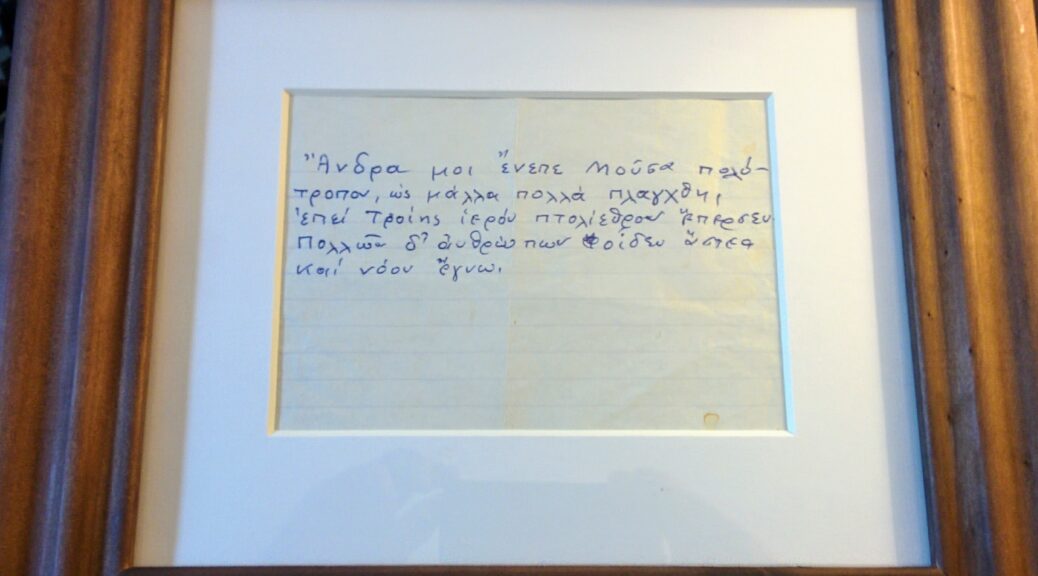
My grandfather wrote this out for me from memory in the summer of 1990, the summer before I turned 15. (He would have said before I turned 16; we had endless arguments about inclusive counting). He must have written it in the village of Καλό Νερό in Messenia, where I, my cousin Angelos and my grandparents were vacationing. He had written it out for me because we had taken the old train to Κακόβατος for the day to go for a swim and a bite to eat (neither of my Greek grandparents knew how to drive). As we were waiting for the train to come, my grandfather started to teach me the opening lines of the Odyssey, to bide the time, I guess. The words were strange to me. They didn’t make sense, even though of course I recognized familiar words. My cousin laughed at me as I tried and failed to reproduce the strange sequence of sounds that my grandfather was patiently reciting.

I remember the scene vividly, and so does my cousin. It stuck with me. I was always aware of the fact that my father had learned ancient Greek in high school and wrote his papers in καθαρεύουσα, the formal language of the Greek state until 1976. But I didn’t grow up learning Greek formally: I learned orally, largely from my father and from my grandparents, who never left Greece and who never really learned any language other than Greek. And I learned largely in Greece, and especially in Athens, in Exarcheia and Glyfada.

I didn’t grow up yearning to know ancient Greek, but in my first year at college at the University of Michigan, I briefly entertained the idea. I flipped to where “Greek” should have been in the course catalog – this was the 90s, we had paper course catalogs – and it read simply, “See Classical Studies.” The first course codes under “Classical Studies,” listed alphabetically, were “Classical Archaeology.” I was planning to double-major in history and economics, and I was vaguely interested in ancient history, so the idea of archaeology intrigued me. I took an introduction to Greek Art & Archaeology taught by John Pedley and an introduction to Field Archaeology taught by Sue Alcock, and that was it: I was hooked.

But I also took Greek that year, the ancient variety, and while I don’t remember being hooked, I did like it. It was different from the Greek I knew. My classmates kept insisting that my knowledge of modern Greek must have been a huge advantage, but I remember thinking that wasn’t so. More than anything else, modern Greek helped me remember certain words, but the language had changed enough that it wasn’t a one-to-one connection. My favorite example is the adjective ποικίλος, which the LSJ renders as “many-coloured, spotted, pied, dappled; wrought in various colours; cunningly wrought; changeful, diversified, manifold; intricate, complex” etc. In Greece now, ποικιλία (the noun) means ‘variety’ and can also refer to a variety plate of appetizers (sort of) served at restaurants, normally for a  bite to eat while you’re drinking (called meze in Greek).

These kinds of connections and interconnections were fascinating to me. They enriched my understanding of my Greek – in wonder, I realized that the Greek word for newspaper, εφημερίδα, was actually a “daily,” literally (ἐφ’ ἡμέρα > ἐφήμερος, cf. English ephemeral). And I understood now that Greek used to have an aspirate, which is why it was an ephimerida and not an epimerida. These are dumb things in retrospect, but it was a revelation to feel that you understood a language and its history rather than simply using it to order souvlakia (still the best thing you can do in any language is order meat on a stick).

I wanted to take ancient Greek because in my addled teen brain I thought it was a kind of family tradition. My father learned ancient Greek in school, my grandfather had taught me my first words of Homer. So it was with some surprise and interest that I read James Nikopoulos’ thoughtful article “On not wanting to know ancient Greek.” In some ways, it sounds like we have a lot in common: we both spent our summers in Exarcheia, we were both raised and educated in the US. But my family saw the language of ancient Greece as something relevant to us. And while my family’s vacations were largely vacation-y, we spent a lot of time surrounded by antiquity: going to archaeological sites and museums, visiting my uncle, who worked as an architect on archaeological projects. I’m not sure that we talked about it much, but it was there, all the time.

And it’s still with me. I’m a professional Classicist – sorry, James – that works on the earliest Greek we have, in the Late Bronze Age. I really derive pleasure from showing students the connections between the Greek words they know and the ones they see in radically different forms in Linear B; that they actually know this word from 14th c. BC Knossos:

4_4_Image2

(It’s to-sa, as in τόσα, “so many,” as in τόσα σουβλάκια [but sadly in this case it’s actually feminine plural, τόσαι]).

On the other hand, I share James’ worry that the Greek language “shouldn’t have to pretend it ever stopped being itself,” and the same goes for Greece. I do find its antiquity endlessly interesting, but if I’m being honest the reason I have gone back every summer since I can remember is the place as it is now and as it has been. I can’t imagine living without it.

And I share James’ regret that I don’t know Greek better, in all its forms. But I’m working on it.

Looking back with Blegen

I’m currently reading Carl Blegen’s “Preclassical Greece,” published in 1941 in Studies in the Arts and Architecture, based on a lecture given at the bicentennial conference of the University of Pennsylvania. It’s a really interesting read.

Looking backward

Some of Blegen’s lecture is – and we shouldn’t be surprised here – dated. For instance, he writes that “the peculiar Hellenic alloy is a complex blend of metal fused together from many elements” (7), meaning peoples: “there is reason to believe that on each occasion when a fresh culture prevailed a considerable body of the earlier racial element survived…” (7). Blegen conflates language, technology and race in a way that nobody would now, and is fond of cultural-historical explanations (e.g., progress on the mainland in the Early Bronze Age is interrupted by an invasion of horse-riding Greek-speakers). In this Blegen was following the lead of archaeologists like V. Gordon Childe, whose cultural-historical syntheses of European prehistory were standard texts in the field. It is nevertheless striking to read that the “fresh advance in the realm of culture” in the Iron Age “worked itself out more expeditiously than in the Early and Middle stages of the Bronze Age, presumably because the Dorian stock, if our conclusions are correct, was racially akin to the Mycenaean strain it conquered” (10). Blegen further wonders if the “cruelty” of historical Greeks were “not perhaps heritages from those remote ancestors who occupied the land in the Late Stone Age” whereas the “delicacy of feeling, freedom of imagination, sobriety of judgment, and love of beauty” might derive from the “progenitors of the Early Bronze Age whose great achievement was the creation of Minoan Civilization” (11). And “To the third racial stock, of Aryan lineage, one might then attribute the antecedents of that physical and mental vigor, directness of view, and that epic spirit of adventure in games, in the chase, and in war, which so deeply permeate Hellenic life” (11). In 2017 this is an uncomfortable thing to read.

Looking forward

Much of Blegen’s paper looks forward, however. He advocates for a total survey of all of Greece. He points out that surface artifacts are useful evidence for subsurface deposits, and suggests that the whole country be “methodically and thoroughly explored” (12) and then 2-3 sites per understudied district be excavated (13). No doubt he would be somewhat surprised at the patchwork of high-intensity surveys that have been conducted in the past 30 years – I imagine that MME is much closer to what he had in mind – but certainly he put his finger on an important development in Greek archaeology, and one that has had an especially important influence on my career.

Blegen also emphasizes that prehistorians are more interested in evidence than treasure. He actually credits Schliemann for being the first to do this, and for making archaeologists more “stratification-conscious”: this is fairly shocking from our 21st century perspective, from which Schliemann is barely more than a treasure-hunter who blasted through the center of the Trojan mound. Blegen emphasizes again and again that most of the most interesting evidence is unpretentious but intellectually rewarding. For instance: “The potent spell exercised by investigation of the preclassical era in Greece on its disciples is not due merely to a desire to recover objects of intrinsic value or to find something novel. It is really a manifestation of that deep impulse by which the inquiring human mind is obsessed to probe into origins and causes” (6). This is exactly the spell that drew me into Greek prehistory (although for me the seminal text was Colin Renfrew’s Emergence of Civilisation [1972]).

Alongside this, Blegen highlights the importance of scientific approaches, declaring that “In the future I believe we shall come more and more to rely on pure science for help in solving many of the problems that face us” (13). He then describes ceramic petrology, a technique that was only then being applied to archaeological ceramics in the New and Old Worlds, as something that would be really useful. (Blegen’s colleague at Cincinnati, Wayne M. Felts, was about to publish an article in the American Journal of Archaeology entitled “A Petrographic Examination of Potsherds from Ancient Troy”).

Both backward and forward

This is how Blegen ends his essay:

By combined effort [i.e., among archaeologists and scientists] we shall ultimately ascertain far more than we yet know regarding the formative period in the history of the Greek people; which, if I may be permitted to repeat what has already been intimated, constitutes at the same time an early stage in the evolution of the culture from which our western civilization is directly descended.

It’s an appropriate ending from our vantage point here in 2017: Blegen is prescient in his intuition that scientific approaches will become more important in archaeological practice, but also looks somewhat awkwardly and optimistically towards a “western civilization” that, we now know, was about to be ripped to shreds by the horrors of WW II.

One of the things I’ve always wanted to do was to start a genealogy of Aegean prehistory. It’s an interesting project, I think. One side benefit would be that I could give hard deterministic papers that erase agency and emphasize the structural constraints of academic training. If dissertations and dissertation advisors count the most, then I fall squarely in the Blegen line: my supervisor was Tom Palaima, who was supervised by Emmett Bennett Jr., who was supervised by Blegen. And I wrote a dissertation on the Linear B tablets of Pylos (which were, of course excavated by Blegen), and I now co-direct an archaeological survey in a poorly-studied area. Pretty Blegen-esque. But about this “western civilization” thing…

Archaeological futures III

[This post is a continuation of two other blog posts: part one and part two.]

I think that a basic structure of the talk I’m giving at Smith College is coming into shape. I’ll start with a brief description of the accelerating sophistication of archaeological methods since I began as a student in the mid-1990s, focusing first on the proliferation of archaeological sciences and their integration into Mediterranean archaeology and the proliferation of data produced by archaeological projects. (I’ll hopefully use data from Corinth Excavations to get a quantitative sense of the increase in data produced).

This leads to the issue of data and digitization. One of my big take-aways from the Mobilizing the Past for a Digital Future book was a more clear sense of how this proliferation of data has encouraged archaeologists to go digital, for a couple of different reasons, two of which I’ll highlight here: (1) The quantities of data are so immense that digitizing them (or better, creating them digitally to begin with) is an elegant solution to basic storage and dissemination needs, and (2) the types of data are so divergent, largely because of the increase in specialist and scientific studies in archaeological projects, that integrating these data are a significant hurdle, and digital integration is again a good solution.

A couple of personal anecdotes come to mind here. The archaeological survey that I was trained on, EKAS, started fieldwork with a “fully functional GIS” – that was exciting in 1999. When I was planning a survey in 2011 (WARP), one of the first things that I did was to think about the GIS and how we could integrate all of our data within it. Although I haven’t exactly been successful at pulling in non-archaeological data to the GIS framework, it still remains the basis for much of our analysis. When I write papers about WARP – as I was this week for a paper I’m giving tonight – I usually write on my desktop and keep my laptop reserved for ArcGIS (I run GIS on my laptop because it’s that indispensable to me). When I started excavating at Corinth in 2004, on the other hand, Corinth Excavations still used hard-bound notebooks, although they had become increasingly form-driven (we used a stamp). To figure out what had been excavated in my area prior to 2004, I had to flip through two or three different hard-bound notebooks. They proved to be not very well-written or illustrated, and I found myself increasingly frustrated by the fact that I was “digging blind.” (Actually that is why I was put there, to figure out what was going on and to “clean up” the interpretive knots created by past supervisors who hadn’t done such a good job).

One of the best arguments for digitization and born-digital data is (in my opinion) to give supervisors more interpretive tools in the field, by allowing them to call up previous years’ work easily on their computers or tablets in the field (additionally reference works and scholarly literature in the field can be extremely useful). This is a way to bring everything that we can to bear on solving interpretive problems in the field. I stress this point because if archaeology is anything, it is that: thinking through problems in the field, at the trowel’s edge (to use the excavation metaphor). Excavators are not just collecting data – they are interpreting as they go, and their interpretations shape their data. To do better archaeology, we need better interpretations more than anything else, and digital tools have allowed us to stretch our capabilities to pull up information of various kinds, especially outside of the library.

In that respect, digital technologies have the ability to help us bridge the field/library divide that is such an important structuring device of archaeological discourse, so much so that it even made it into an Indiana Jones movie (note: Vere Gordon Childe didn’t spend most of his time in the field). On the other hand, there can be a tendency, at least in some writing on “digital archaeology,” to emphasize the importance of data collection in a way that seems to separate it from interpretation. The word “data” appears 1619 times in the Mobilizing the Past book, “interpret*” only 164 times, and the general tone of much of the discussion focuses on interpreting data that have already been collected, thus reifying the field/library divide as it is being transformed into a field/computer lab divide. The section entitled “Interpretation” in the introduction to the Mobilizing the Past book is less than two pages long and focuses on a discussion of Bill Caraher’s “slow archaeology” work – in the same chapter, we get more words devoted to Apple’s famous “1984” commercial. Likewise Roosevelt and his colleagues briefly discuss the importance of interpretation trench-side in their introduction, but at no point is their born-digital system described as improving interpretation, nor do they talk about interpretation very much at all. In fact, I only see one contribution to interpretation in the entire article: an assertion that technologies that model space in three dimensions would aid in interpretation. This is how they describe their system (emphasis mine):

Conceived and designed before excavation commenced, the system was ‘‘born digital’’ (Austin 2014: 14), operating with integrated databases and aiming for the production of high-quality data with manifold improvements in accuracy and efficiency.

I don’t want to linger too long here, since I’ve already made my feelings clear. This is not a criticism of the tools or practices of digital archaeology, but rather of its discourses. But discourses are important: they reveal what we value and what we don’t.

What I want to say, then, is that we’re barely realizing the potential of our new digital tools, but that to make them work for us, we need to avoid this obsession with high-quality data, efficiency and accuracy. All those things are wonderful, but they are all a means to an end: productive interpretations and analyses of research questions. It’s true that high-quality data aren’t just produced for us but for future generations of archaeologists, but I think it’s a mistake to think that if we just produce the highest-quality data then one day someone might make interpretive hay of them. Our primary goal has to be productive interpretations in the here and now.

“Digital archaeology,” if that is even a thing, then, is at once an opportunity and a challenge. The opportunities are obvious, and they’ve encouraged even the most skeptical of us to become digital archaeologists in a very meaningful way. The opportunities are made very clear in the Mobilizing the Past book and in the article of Roosevelt et alii. The challenge is to unthink data and methodological sophistication as ends in themselves.

Let me end with another personal anecdote, which reveals that I am as guilty of this as anyone. When I started working on EKAS, I was extremely suspicious of defining “sites” in the field. I still am. What I wanted to do was to plug all of the artifactual evidence into the GIS and produce maps that would help us to understand artifactual distributions better and to define “sites” (if that’s we wanted to do) in the computer lab. I still think that’s a better way of doing things than declaring “ooh, there’s lots of stuff here” and defining a site on the fly. The on-the-fly way of doing things is data-poor and isn’t meant to require a lot of thought. You might feel rushed to make a decision as you pace back and forth trying to decide if it’s “really” a site while your undergraduate field walkers look at you impatiently, waiting to get on with it. The GIS-y way of doing it is data-rich and involves more thinking. In fact, that’s the value of the digital way of doing it: you can display and comprehend more evidence than is easily comprehensible when you’re in the field. So on the one hand, there is a separation made between fieldwork and analysis, which is something I’ve argued against. On the other, that separation gives you more information and more time to contemplate your decision-making. It gives you a little more information, and a bit of space to think.

Climate and Collapse in the LBA Mediterranean

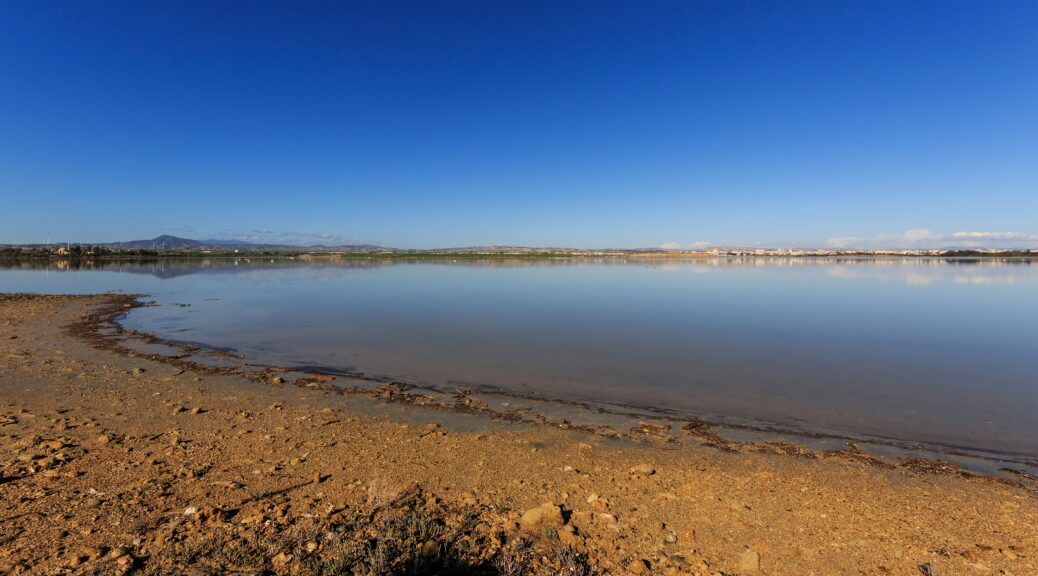
Through my Twitter feed I was recently alerted to a new article published in PLOS-ONE entitled “Environmental Roots of the Late Bronze Age Crisis“, co-authored by D. Kaniewski, E. Van Campo, J. Guiot, S. Le Burel, T. Otto, and C. Baeteman, all of whom are geologists and/or environmental scientists working in France and/or Belgium. The authors argue that the collapse of various states in the eastern Mediterranean at the end of the LBA can be attributed to an environmental stimulus, specifically a 300-year drought. The new evidence for this argument is a core from the Larnaca Salt Lake near the important LBA site of Hala Sultan Tekke, which shows that the area slowly transitioned from a Mediterranean woodland to a dry steppe over the course of the LBA in two distinct steps:

The first step was recorded at 1450–1350 cal yr BC, and a second step was reached at ca. 1200 cal yr BC. The drivers of environmental changes for the second step are quite different as no fire activity or changes in the lagoon are attested. The agricultural activity, rich around the site, also strongly declined since 1200 cal yr BC. The PCA-biplot (Fig. 4) indicates that agriculture only became one of the main components of environmental dynamics since ca. 850–750 cal yr BC.

The authors then compare this development to Gibala-Tell Tweini in northwest Syria, where evidence for a long drought correlates with the core evidence from Larnaca. So the authors conclude that

Both proxies [Larnaca and Gibala-Tell Tweini] reveal a hydrological anomaly for the 1200–850 cal yr BC period, indicating a similar, although not uniform, drought event, recorded both on the island and on the continent. The onset of the drought event seems to be chronologically close to the LBA crisis and the Sea People event.

From this, their ultimate conclusion is that

this study shows that the LBA crisis coincided with the onset of a ca. 300-year drought event 3200 years ago. This climate shift caused crop failures, dearth and famine, which precipitated or hastened socio-economic crises and forced regional human migrations at the end of the LBA in the Eastern Mediterranean and southwest Asia. The integration of environmental and archaeological data along the Cypriot and Syrian coasts offers a first comprehensive insight into how and why things may have happened during this chaotic
period. The 3.2 ka BP event underlines the agro-productive sensitivity of ancient Mediterranean societies to climate and demystifies the crisis at the Late Bronze Age-Iron Age transition.

Here is where the authors and I part ways. My main problem lies in the gap between the first and second sentence. Even if we accept the modest conclusion that “the LBA crisis coincided with the onset of a ca. 300-year drought event,” why do we need to link the two causally? This is a post hoc ergo propter hoc-esque logical fallacy. This is especially so since we don’t have evidence for a large-scale drought. The two proxies they are using are under 250 km apart. This might seem like a long distance, but it’s positively tiny considering that they are using them to explain a collapse that spans the Greek mainland, Anatolia, the Levantine Coast, and Egypt. Mycenae on the Greek mainland, for instance, is about 1200 km away from Gibala-Tell Tweini in Northwest Syria, and almost as far away as the Hittite capital Hattusa, which is about 1000 km away from Egypt. Even if we were 100% sure about the 300-year old drought in Cyprus and Syria (unlikely given that we have only two proxies), can we really use the drought to explain the collapse of the Mycenaean political order some 1000 km away?

The rest of the concluding paragraph is, frankly, a guess. We don’t have evidence that allows us to claim, for instance, that “This climate shift caused crop failures, dearth and famine, which precipitated or hastened socio-economic crises and forced regional human migrations at the end of the LBA in the Eastern Mediterranean and southwest Asia.” Even worse is the claim that “The 3.2 ka BP event underlines the agro-productive sensitivity of ancient Mediterranean societies to climate” since it claims to show what it assumes. That is, the authors assume that drought led to collapse (I say assume because they don’t actually know that), then they claim that this shows that these societies were prone to collapse because of droughts! This is called begging the question.

I could go on and on, but I don’t want to belabor the point. The Mediterranean is climatically heterogeneous. Even if it weren’t, it is a huge stretch to assume that a drought in one part of the eastern Mediterranean can be used to extrapolate another drought elsewhere in the eastern Mediterranean. Even if it could, we can’t be sure that because the two “events” (they’re really processes, of course) are simultaneous or nearly so, that one explains the other. I’d concede that the drought contributes to our understanding of the collapse, but it’s simplistic to argue that this climate shift caused political collapse. In general, I’d add that the authors naively accept many archaeological and historical arguments as facts — the “Sea Peoples” are a big historiographical problem, for instance — and they clearly aren’t totally comfortable with the archaeological scholarship on this very difficult problem.

What all of this shows is the weakness of research that isn’t really interdisciplinary. If the authors really wanted to argue that climate and political collapse in the LBA were interrelated, they should have brought historians and archaeologists on board. They didn’t, and the results were as predictable as if I (an archaeologist of the Greek LBA) had tried to write an article interpreting their palynological analysis.