Category Archives: dimitri

Homer, the Iron Age, and Materiality

The new issue of the Cambridge Archaeological Journal contains an article by James Whitley, entitled “Homer’s Entangled Objects: Narrative, Agency and Personhood In and Out of Iron Age Texts.” Its abstract reads as follows:

In recent years, material culture studies have come to embrace contemporary Melanesia and European prehistory, but not classical archaeology and art. Prehistory is still thought, in many quarters, to be intrinsically more ‘ethnographic’ than historical periods; in this discourse, the Greeks (by default) become proto-modern individuals, necessarily opposed to Melanesian ‘dividuals’. Developments in the study of the Iron Age Mediterranean and the world of Homer should undermine such stark polarities. Historic and proto-historic archaeologies have rich potential for refining our notions both of agency and of personhood. This article argues that the forms of material entanglements we find in the Homeric poems, and the forms of agency (sensu Gell 1998) that we can observe in the archaeological record for the Early Iron Age of Greece (broadly 1000–500 bc) are of the same kind. The agency of objects structures Homeric narrative, and Homeric descriptions allow us precisely to define Homeric ‘human–thing entanglement’. This form of ‘material entanglement’ does not appear in the Aegean world before 1100 BC.

If Whitley is right, of course, this is an important discovery that cuts to the heart of how we understand the Greek world, the history of the Western notion of personhood, and so on. Obviously it’s not possible in a short blog post to touch on every aspect of Whitley’s argument, so I’m just going to concentrate on a series of claims that Whitley makes about the Homeric poems. Whitley argues (397)  that “it is the particular entanglements of people, narratives and things… that form much of the matter of both Homeric poems.” This argument pins down a key claim of Whitley’s, namely that (398)

the ‘entanglement’ of objects within peoples’ lives, and the agency attributed to objects in many kinds of narrative in many genres undermines the stark dichotomy between a morally autonomous ‘Western’ individual and a socially-entangled Melanesian ‘dividual’. It should no longer be taken as self-evident then that those proto-Westerners, ‘the Greeks’, whose ‘individualism’ many authors have taken as rising in Archaic times, were ‘individuals’ in the modern sense at all.

Whitley’s discussion of Homer focuses on two types of objects in Homer: those with extensive biographies, and those which are described at great length (these descriptions are known as ekphrasis). Whitley claims (399) that subjects of ekphrasis provide occasions for brilliant poetic performance, but have little narrative force, whereas biographical objects, while rarely described in detail, are often agents that drive the narrative forward. An example of an ekphrasis for Whitley is the gold brooch described by Odysseus, disguised as a beggar, to Penelope. But Whitley says that in ekphrasis “images act as a prompt to oral narrative” (399). But in this case, the brooch is entirely absent: the whole point is that Odysseus/the beggar is describing the brooch totally from memory. So it seems odd to focus on the materiality of an immaterial thing. And the fundamental immateriality of this exchange is confirmed by the fact that the brooch is just the introduction to the beggar’s overall description of Odysseus that causes Penelope to weep: the brooch is described in 6 lines (19.226-31), but the beggar’s description of Odysseus takes up a full 24 lines (19.225-248).

In fact, Whitley’s focus on material objects is a problem to begin with. Whitley focuses on artifacts (Agamemnon’s scepter, Achilles’s arms, Odysseus’s helmet) that are potentially recognizable archaeologically, because he’s an archaeologist. But this is surely far too limiting: after all, as much as archaeologists might wish it to be true, it’s not the case that the world is just made up on individuals, dividuals, and artifacts. It’s not. There are animals, plants, actions, features of persons, and divine signs, among many, many other things.

I didn’t pick these examples at random. When I think about those marks that are most entangled with personhood in Homer, I think about these, not artifacts. Odysseus’s identity, after all, is not revealed mainly by artifacts. It is instead revealed by an animal, Odysseus’s dog Argos, who dies when at last his master returns home after 20 years (Od. 17.290-310), by his amazing knock-out of Iros with a single punch (Od. 18.88-117), by a scar on his leg that he got while hunting in the mountains with his grandfather Autolykos (Od. 19.386-502), by divine portents seen by Theoklymenos (Od. 20.350-357), by his ability to string his bow — notice that it is his ability to manipulate this ‘biographical’ artifact and not the artifact itself which is decisive here — and his use of it to slaughter the suitors in his heroic persona, with divine assistance (Od. 21.404-22.41), and finally, and most decisively, by his clear and detailed recollection of a fixed bed which he built with his own hands from a living olive tree (Od. 23.181-204).

It’s very odd to read an article about non-human things and personhood in Homer that doesn’t refer to any of these things. It might be possible to describe Homeric poems as “narratives of people and things” (411), but only if we radically cut down our full range of vision to a tiny subset of interactions in order to suit one particular argument.
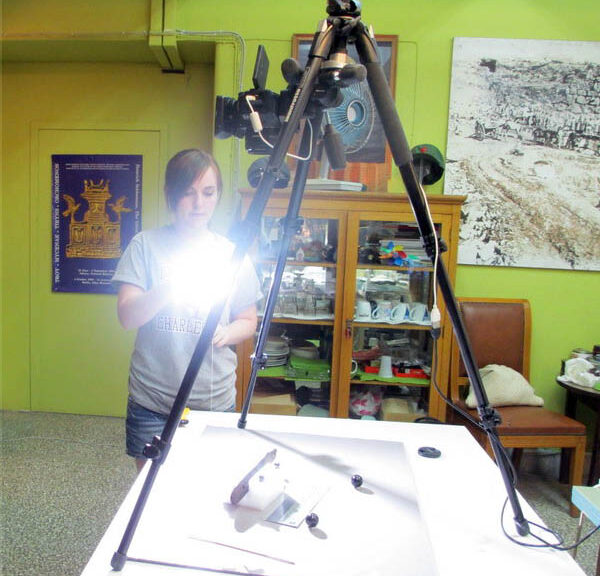
Our AIA talk on the digital imaging of Linear B

Kevin Pluta and I submitted an abstract to present a 20-minute paper at the upcoming annual meeting of the Archaeological Institute of America in Chicago (January 2-5, 2013) and we’ve just been notified that it’s been accepted. Here’s the abstract we submitted:

Digital imaging of the Linear B tablets from the “Palace of Nestor”

This paper presents a new project, whose goal is to create a print and digital edition of the administrative texts from the “Palace of Nestor” using advanced imaging techniques. Initiated in the summer of 2013, it is part of the official publication of the “Palace of Nestor” at Pylos excavated by the University of Cincinnati under the auspices of the American School of Classical Studies at Athens. We argue that digital editions such as ours have the potential to transform the study of the Aegean Bronze Age by allowing researchers to interact with artifacts at a level of detail and verisimilitude that approaches that of autopsy.

We employ two imaging techniques. The first of these is Reflectance Transformation Imaging (RTI), a method that involves taking multiple photographs of the same artifact under variable lighting conditions. These photographs are stitched together into an image file that stores the color of each pixel in addition to how it reacts to light, allowing the user to re-light the artifact in an interactive virtual environment. RTI therefore affords the opportunity to select the best lighting angle or angles for clearest presentation of the inscriptions. Our second imaging technique is structured light three-dimensional scanning, which has the ability to record accurate, low-interference surface data with minimal clean up. The technique is particularly useful as it collects color data that permit realistic renditions of the artifacts being recorded. In combination, these two techniques will provide the user with highly accurate renditions of the color, shape, topography, and texture of each and every administrative document from Pylos.

There are two closely-related advantages that we see to this digital imaging. First, we anticipate an improvement in the conservation and archiving of the physical artifacts, since the availability of high-resolution images in two and three dimensions will reduce the need for their study and handling. Second, a digital edition provides users with the ability to work interactively with the administrative documents in a digital environment. The resolution of the imaging is such that it even permits users to propose new readings and joins. This allocation of high-quality primary data to scholarly experts represents an exciting development. Far from being merely an enhancement of standard methods of illustration, these imaging techniques have the potential to transform the field by distributing control of the primary data to all qualified experts.

Also accepted was a submission for a poster, entitled “The use of structured light scanning for the study of the Linear B deposits from Pylos, Messenia, Greece,” and co-authored by the 2013 team: Ben Rennison, Jami Baxley, James Newhard, Kevin Pluta, and myself.

Sampling and collection strategies in Mediterranean survey

I’ve just finished reading Andy Bevan’s and James Conolly’s book on their archaeological survey of Antikythera, Mediterranean Islands, Fragile Communities and Persistent Landscapes: Antikythera in Long-Term Perspective (Cambridge University Press 2013). It is a very impressive book about a very impressive archaeological project. In two seasons, they surveyed virtually the entire island (18.58 sq km, 90% of the island’s total area) with walkers spaced fairly tightly (15 m). They collected their tract data every 10 m, so every sherd collected in fieldwalking can be located within a 20 sq m strip. There is some error involved in this, but nevertheless this is, as far as I know, the best spatial control that has been achieved by any field survey in the Mediterranean.

I’m going to skip discussion of the analyses (which equally impress) because I was particularly interested in their collection strategies (for regular tractwalking, as opposed to more intensive “site” collection strategies).  Fieldwalkers counted all artifacts they saw in a corridor extending 1-2 meters on either side of their line and collected feature sherds: i.e., “rims, bases and handles, decorated body sherds” (14). Now obviously such a strategy is a compromise, as all collection strategies are. Bevan and Conolly write that “we see the collection of feature sherds as a reasonably sensible fieldwork compromise” (53) and I don’t disagree. Where I do disagree is when they go on to say (in the next sentence, same page) that

Many of the proposed alternatives, such as only collecting a ‘representative’ example of each type of sherd found in the current survey unit (Moore 2008), are substantially less effective because they tend to force very high-level interpretative decisions (e.g., about what exact kinds of pottery styles and fabrics are present) to be made very early on in the field, prior to artefact cleaning and without much overview of the entire assemblage (which also leads to significant practical delays if only one or two specialists are asked to make this decision or much greater bias if a wider group of semi-trained surveyors are asked to do so).

Moore 2008 is an article by Scott Moore, a ceramicist with whom I’ve worked in Cyprus (PKAP); the article describes the Chronotype system developed by Timothy Gregory, with whom I’ve worked in the eastern Corinthia (EKAS), so I’m pretty familiar with the system. I’ve worked with it for six or seven field seasons at those projects. And I don’t think that the critique of it by Bevan and Conolly is fair.

The criticism, to recap, is that this system (and others like it) require high-level interpretive decisions in the field, prior to cleaning and without much overview of the entire assemblage. What is this high-level interpretive decision? Field walkers are instructed to pick up the first artifact they see and every other artifact that is different (with respect to fabric, surface treatment, body part, and thickness), and that if they are uncertain whether an artifact is different, to collect it.

Now this doesn’t seem to me to require much high-level interpretation. My experience is that it’s pretty straightforward. The walkers don’t need to know “what exact kinds of pottery styles and fabrics are present” nor do they need to have an “overview of the entire assemblage” (Bevan and Conolly 2013, 53). They just pick up what they see, and if it might be different, they collect it. The experience of everyone who has used the Chronotype system (and this is also based on experimental data) is that field walkers overcollect, i.e., collect redundant data, so that if the field walkers make any mistakes, it is in the direction of total collection. (This is a summary of Gregory 2004: 28-29, published here and cited elsewhere by Bevan and Conolly).

The other issue is that the identification of what is and what is not a feature sherd is a kind of decision (high-level or otherwise), so that the “feature sherd” collection strategy is open to the same criticism: i.e., that it forces field walkers to make a decision before the artifact has been cleaned. I suppose that a critic would point out that it’s easy to identify handles and rims and bases, and I suppose that it is. But it’s not clear to me — maybe it’s clear to everyone else — that it’s so much easier than what Chronotype asks you to do. The other issue is what happens when a fieldwalker is uncertain? In the Chronotype system, the impulse drilled into fieldwalkers is “when in doubt, collect.” What if, using the “feature sherd” strategy, a sherd looks like a plain body sherd, but in actuality preserves a tiny portion of the rim that goes unnoticed? Perhaps the fieldwalker would collect it anyway. But I would guess that in most cases, s/he would not.

In any case, this brings us to the weakness of “feature sherd” collection strategies: they do not collect sherds that are potentially diagnostic. As Bevan and Conolly repeatedly point out, fabrics are important indicators of chronology, function, and even origin, and they are becoming more and more important over time, not less. I point this out because as Bevan and Conolly (52) correctly observe, the

significant discrepancy between what we now know and what we might know in <the> future, is one of the reasons we feel strongly that surface survey, like other kinds of archaeological fieldwork, should make systematic, permanent artefact collections …*

All this is not to say that the Chronotype system is perfect: it is certainly not. In fact, if I were doing survey in Antikythera, I would not use it. So I am certainly not questioning their decision to collect feature sherds. After all, the proof of the pudding is in the eating, and there is no doubt that Bevan and Conolly have provided us with rich and nourishing results (to extend the metaphor rather awkwardly). But neither do I think that the critique of Bevan and Conolly is fair, nor do I think that we can solve all of our problems by collecting feature sherds only.

The problem here is rather more complex, I think, and it has to do with research design, a theme that featured prominently in an article that I co-authored with Bill Caraher and David Pettegrew in 2006. Selective collection (i.e., collecting feature sherds, and especially the Chronotype collection method) is a way to reduce the collection of redundant data. On the Eastern Korinthia Archaeological Survey (EKAS), for instance, the project counted 146,599 artifacts in only 3.85 sq km. The Antikythera survey, in contrast, counted 66,000 artifacts in 18.58 sq km. That is a huge difference! It is somewhat larger than it seems, of course, because EKAS used a tighter 10 m walker spacing as opposed to Antikythera’s 15 m, but if we correct for that, we will see that EKAS counted over 7 times as much pottery as Antikythera did. What about collection? EKAS collected 38,337 artifacts (26%), Antikythera collected 25,675 (39%) by my count of their open data, which I downloaded here.

It’s probably impossible to find a place to do survey in Greece that is more different than the Corinthia than Antikythera (or the other way around, depending on your perspective!), and so the differences in the collection strategies aren’t that surprising. The Corinthia is a high-density artifactual landscape, even for Greece. Antikythera is very low-density, in part because (a) there are virtually no rooftiles (my dream!!!) and (b) for significant periods of its history, the island was abandoned or had a very low population. So a survey in Corinthia needs to find ways to cope with the fact that a high-intensity collection strategy would have produced insane numbers of artifacts. This is simply not a concern of a survey in a place like Antikythera (or at least, it’s a pretty minor concern). All of us, I think, would agree that it makes no sense to sample a high-density artifactual landscape the same way you would sample a low-density artifactual landscape. The lower the density, the more sense it makes to move towards total collection and towards piece-plotting individual finds.

In sum, I’d argue that the Chronotype collection strategy, flawed as it may be, is one way to deal with a particular problem. I’d readily concede that it may not be the best. On the other hand, it does do a good job at (a) reducing the collection of redundant data, (b) collecting useful qualitative and (to a lesser extent) quantitative data about the surface assemblage, and (c) avoiding the potential biasing effect of ignoring non-decorated body sherds that can, despite their humble appearances, be highly diagnostic (my ceramicist friends insist that they can do a lot with body sherds, and I believe them).

This is not to say that Bevan and Conolly did the wrong thing: I don’t think that at all. But I do think that we need to weigh the advantages and disadvantages of our methods with clarity. This is something that is a real strength of the Antikythera survey book, in fact. Their second chapter ends with a page of meditations on “methodological limitations.” So it is a minor criticism to pick them up on their brief discussion of collection strategies. My point is not to nitpick, but to extend the discussion about survey collection a bit further, beyond the text of their immensely rewarding book.

Notes
* In the … I have omitted reference to the same article by Timothy Gregory (2004), which advocates for processing artifacts in the field, although it should be pointed out, as Gregory indeed does (2004:30), that this procedure was instituted by necessity, due to restrictions placed on the survey in the archaeological permit.

Political unity in the LBA?

The ever-useful academia.edu (which now keeps asking me if I am interested in Roman Archaeology) brought to my attention an article by Jorrit Kelder entitled “Ahhiyawa and the World of the Great Kings: A Re-evaluation of Mycenaean Political Structures” (Talanta XLIV [2012]). The author argues in this paper that the Mycenaean world was unified into a single state ruled by a single king (the wanax) at Mycenae, while the other Mycenaean palaces were subsidiary administrative centers, each ruled by a local king (the lawagetas).

The spur for this argument, which runs totally against the grain of all Mycenaean scholarship, is the fact that in Hittite diplomatic texts, the region called Ahhiyawa (now located by Hittite scholars in the Aegean) is ruled by a “great king.” It is indeed interesting that our usual understanding of the Mycenaean world, i.e. that it is a patchwork of independent peer polities, is so different from the picture we get from the Hittite texts, and Kelder is right to identify this as an important question that needs resolution. His solution, however, is to accept the historical reality of the Hittite texts and then see whether he can fit the Mycenaean evidence into this picture.

In some ways, of course, that’s what we all do. We work from the evidence we know best to solve problems that they impinge upon, or we temporarily ignore a complex reality so that we can focus our attention on a particular problem (what Giddens calls “methodological bracketing”). The difference is the way that we go about treating the material we don’t know well but which is important to our argument.

In this case, the problem is the way that Kelder treats the Mycenaean material. For instance, we read that

The point that various large-scale infrastructural works (most notably the drainage of the Kopais basin in Boeotia, and the evidence for a well-developed network of roads in, especially, the Argolid) are difficult to reconcile with the modest amounts of resources and manpower that, according to the Linear B texts, would have been available to the individual palaces is usually ignored…

This is all we are told (no citations are given). It is not an unimportant statement, for together with the cultural and administrative homogeneity of the Mycenaean world, it allows that author to conclude in the following paragraph that “The argument for a politically fragmented political landscape during the Late Bronze Age thus seems to be based on assumptions, rather than facts.” It thus shoulders a great deal of argumentative weight.

Passing aside the administrative homogeneity of the Mycenaean world, which seems to me to ignore the context in which writing took place in LBA Greece (on which, see Kevin Pluta’s dissertation), this argument doesn’t hold. The author assumes that what is written on Linear B texts is congruent with (“according to the Linear B texts”), or at least indicative of, the total resources commanded by individual palaces. This is to misunderstand the nature of the Linear B texts and the processes whereby we have received them. The amount of labor recorded on the Linear B texts is indeed not very large, but it would be a mistake to conclude from this that the palace could not command large quantities of labor. As many scholars have pointed out, the Linear B texts heavily bias regular transactions, probably because those texts were less often recycled and reused. Thus we are much more likely to have evidence of annual or monthly transactions than ad hoc transactions. A good example of this is the fact that we have much more evidence for dependent groups of women and children at Pylos who are allocated monthly supplies of foodstuffs for their support than evidence for other short-term allocations of foodstuffs. Second, there is some good evidence that the palaces used multiple systems to recruit labor, including the use of intermediaries who were allocated large quantities of staples to recruit various laborers for palatial projects. So what we have in the Linear B texts are fragments of information about the labor that was certainly available to the palace, but in no way can we use this information to determine that the palaces didn’t have enough labor to, say, drain the Kopais or build a road 100 miles long, especially when neither has been adequately quantified.

Kelder makes the important point, and it is a correct one, I think, that it is a mistake to equate administrative borders with political borders (p. 4, bottom). On the other hand, he misrepresents what we know about the two main officials of the Mycenaean state, the wanax and the lawagetas. Although the contexts in which they are appear are similar, it is not true to say that (p. 5, top):

The numerous (and as far as I can see, unconvincing) attempts to make a clear distinction between the two officials, other than the size of their respective temenoi (at Pylos, the wanax’s is thrice the size of that of the lawagetas), clearly illustrate that there is no real consensus on the exact position and status of either of them.

Actually, there is a clear distinction between the two, which is demonstrated by a number of the secondary sources cited in this article. The adjective formed from wanax is wanakteros, which makes use of a Greek suffix (-teros) that indicates binary opposition (like Greek ἕτερος, “the other [of two]”), while the adjective formed from lawagetas is lawagesios, a regular adjectival ending. Thus it seems possible that the wanax is an important structural concept in Mycenaean Greek (at least among the administrators). There are other differences. The wanax appoints the damokoros, a regional official who administers one of the two main provinces of Pylos. He is thus directly involved in regional administration.

This much is consistent with Kelder’s argument that the wanax is the real king, whereas the lawagetas is a sub-king. But where is the evidence that the lawagetas is a “ruler-like figure”? This is crucial because the presence of two “ruler-like figures” is what Kelder finds so problematic about traditional interpretations of the Mycenaean political order. The answer is that there is no such evidence. The lawagetas appears in a number of important contexts, as does the wanax, but there is no evidence that he is a ruler-like figure. Why couldn’t he be something like the grand vizier, for example? This possibility is never entertained.

Also strange is Kelder’s reference to “two throne-rooms.” Here he elides the important difference between a throne-room and a megaron. The former is an interpretation of the function of a space; the latter is a designation of a particular architectural configuration. It is true that the rooms that we consider throne-rooms are megara, but it hardly follows that all megara are throne-rooms. In fact at Pylos, the lawagetas is not thought to hold court in the smaller megaron (room 23), but in Halls 64-65. It’s not certain what the other megara at Mycenaean palaces are for, but nowhere are the possibilities (except the one favored by the author) entertained.

Kelder’s put his finger on an important question, but although he concludes his article with the statement that “the growing body of circumstantial evidence for a unified Mycenaean state now seems overwhelming,” I am afraid that we are no closer to solving this thorny problem. That will require close, sustained engagement with the Hittite and the Mycenaean evidence.

Reblog: Advanced imaging of the Linear B tablets from Pylos

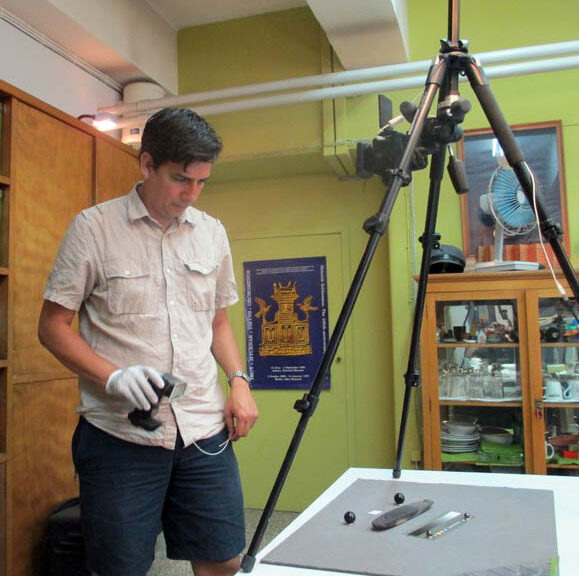
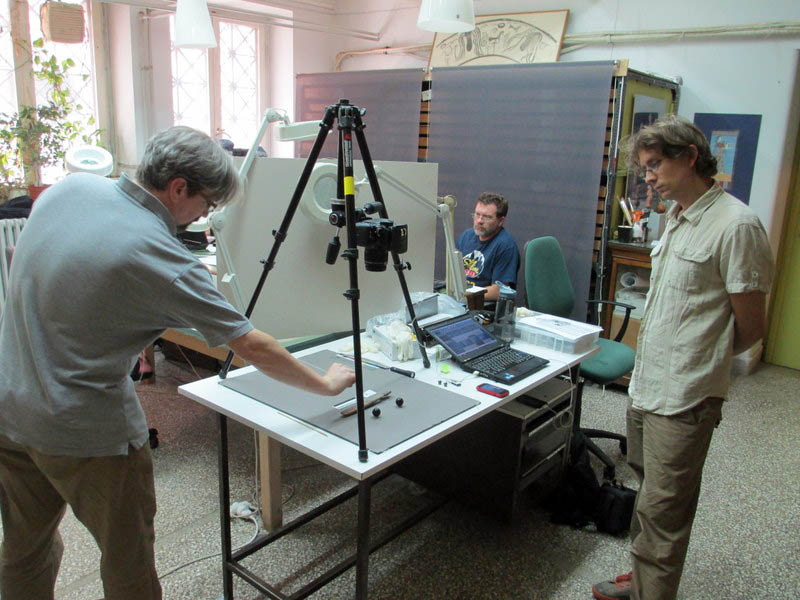
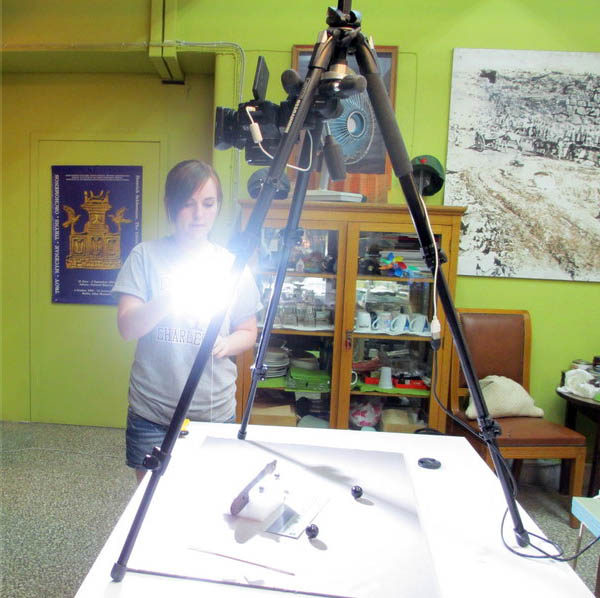
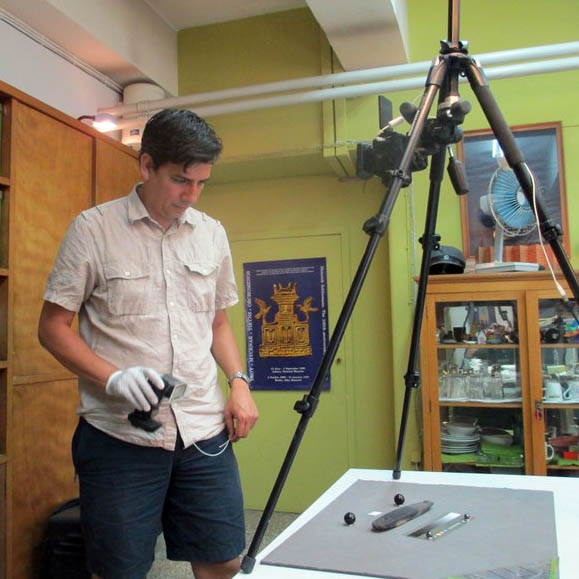
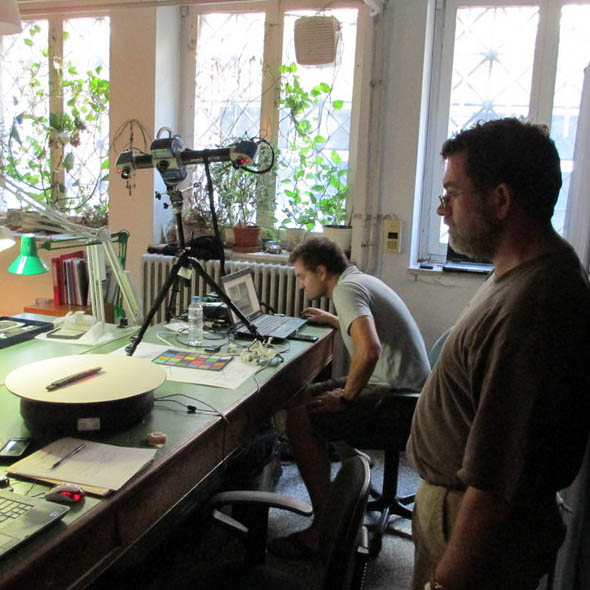
This summer I co-directed (with Kevin Pluta) a project in which we began advanced imaging (RTI and 3D scanning) of the Linear B tablets from the “Palace of Nestor” at Pylos (modern Ano Englianos). These tablets are now housed in the National Archaeological Museum in Athens.  I’ve written a couple of blog posts elsewhere about the project: one for the website of the American School of Classical Studies at Athens (ASCSA), through which we applied for our permit, and another for the Archaeological Computing Research Group (ACRG) at the University of Southampton, a member of whom, Hembo Pagi, trained us in RTI. The posts say the same thing, more or less, to slightly different audiences. You can read the stories here (ASCSA) and here (ACRG).

RTI with Kevin Pluta (left) and Hembo Pagi (right)
RTI with Jami Baxley
RTI with Dimitri Nakassis
3D scanning with Jim Newhard and Ben Rennison

Climate and Collapse in the LBA Mediterranean

Through my Twitter feed I was recently alerted to a new article published in PLOS-ONE entitled “Environmental Roots of the Late Bronze Age Crisis“, co-authored by D. Kaniewski, E. Van Campo, J. Guiot, S. Le Burel, T. Otto, and C. Baeteman, all of whom are geologists and/or environmental scientists working in France and/or Belgium. The authors argue that the collapse of various states in the eastern Mediterranean at the end of the LBA can be attributed to an environmental stimulus, specifically a 300-year drought. The new evidence for this argument is a core from the Larnaca Salt Lake near the important LBA site of Hala Sultan Tekke, which shows that the area slowly transitioned from a Mediterranean woodland to a dry steppe over the course of the LBA in two distinct steps:

The first step was recorded at 1450–1350 cal yr BC, and a second step was reached at ca. 1200 cal yr BC. The drivers of environmental changes for the second step are quite different as no fire activity or changes in the lagoon are attested. The agricultural activity, rich around the site, also strongly declined since 1200 cal yr BC. The PCA-biplot (Fig. 4) indicates that agriculture only became one of the main components of environmental dynamics since ca. 850–750 cal yr BC.

The authors then compare this development to Gibala-Tell Tweini in northwest Syria, where evidence for a long drought correlates with the core evidence from Larnaca. So the authors conclude that

Both proxies [Larnaca and Gibala-Tell Tweini] reveal a hydrological anomaly for the 1200–850 cal yr BC period, indicating a similar, although not uniform, drought event, recorded both on the island and on the continent. The onset of the drought event seems to be chronologically close to the LBA crisis and the Sea People event.

From this, their ultimate conclusion is that

this study shows that the LBA crisis coincided with the onset of a ca. 300-year drought event 3200 years ago. This climate shift caused crop failures, dearth and famine, which precipitated or hastened socio-economic crises and forced regional human migrations at the end of the LBA in the Eastern Mediterranean and southwest Asia. The integration of environmental and archaeological data along the Cypriot and Syrian coasts offers a first comprehensive insight into how and why things may have happened during this chaotic
period. The 3.2 ka BP event underlines the agro-productive sensitivity of ancient Mediterranean societies to climate and demystifies the crisis at the Late Bronze Age-Iron Age transition.

Here is where the authors and I part ways. My main problem lies in the gap between the first and second sentence. Even if we accept the modest conclusion that “the LBA crisis coincided with the onset of a ca. 300-year drought event,” why do we need to link the two causally? This is a post hoc ergo propter hoc-esque logical fallacy. This is especially so since we don’t have evidence for a large-scale drought. The two proxies they are using are under 250 km apart. This might seem like a long distance, but it’s positively tiny considering that they are using them to explain a collapse that spans the Greek mainland, Anatolia, the Levantine Coast, and Egypt. Mycenae on the Greek mainland, for instance, is about 1200 km away from Gibala-Tell Tweini in Northwest Syria, and almost as far away as the Hittite capital Hattusa, which is about 1000 km away from Egypt. Even if we were 100% sure about the 300-year old drought in Cyprus and Syria (unlikely given that we have only two proxies), can we really use the drought to explain the collapse of the Mycenaean political order some 1000 km away?

The rest of the concluding paragraph is, frankly, a guess. We don’t have evidence that allows us to claim, for instance, that “This climate shift caused crop failures, dearth and famine, which precipitated or hastened socio-economic crises and forced regional human migrations at the end of the LBA in the Eastern Mediterranean and southwest Asia.” Even worse is the claim that “The 3.2 ka BP event underlines the agro-productive sensitivity of ancient Mediterranean societies to climate” since it claims to show what it assumes. That is, the authors assume that drought led to collapse (I say assume because they don’t actually know that), then they claim that this shows that these societies were prone to collapse because of droughts! This is called begging the question.

I could go on and on, but I don’t want to belabor the point. The Mediterranean is climatically heterogeneous. Even if it weren’t, it is a huge stretch to assume that a drought in one part of the eastern Mediterranean can be used to extrapolate another drought elsewhere in the eastern Mediterranean. Even if it could, we can’t be sure that because the two “events” (they’re really processes, of course) are simultaneous or nearly so, that one explains the other. I’d concede that the drought contributes to our understanding of the collapse, but it’s simplistic to argue that this climate shift caused political collapse. In general, I’d add that the authors naively accept many archaeological and historical arguments as facts — the “Sea Peoples” are a big historiographical problem, for instance — and they clearly aren’t totally comfortable with the archaeological scholarship on this very difficult problem.

What all of this shows is the weakness of research that isn’t really interdisciplinary. If the authors really wanted to argue that climate and political collapse in the LBA were interrelated, they should have brought historians and archaeologists on board. They didn’t, and the results were as predictable as if I (an archaeologist of the Greek LBA) had tried to write an article interpreting their palynological analysis.

Alice Kober, Aegean prehistory, and the media

The strength of the publicity being showered on Alice Kober’s work at the moment is quite striking. The recent interest has been sparked by a new book by Margalit Fox, entitled The Riddle of the Labyrinth: The Quest to Crack an Ancient Code (Harper Collins). The book and Alice Kober’s pioneering work have been the subject of articles in the BBC, the New York Times (by Margalit Fox), and PRI’s the World. (One article that is not in the popular media but ought to be read by all prehistorians interested in Kober is this blog post).

Alice Kober

The evident interest in Alice Kober generated by this popular book, has made me reflect on the fact that Aegean prehistorians have not done a good a job as they might have in communicating the excitement and interest of Greek prehistory to a popular audience. This is not to say that we haven’t been good at outreach — prehistorians give many public lectures through the AIA’s lecture tours, for example, and Greek prehistory has a fairly strong presence on the web. It nevertheless remains the case that few books for a popular audience have been written about Aegean prehistory, and when they have, they haven’t received much attention. I think that this is because such books have been written as handbooks or textbooks, not as narratives. That narrative is important seems clear from the first sentence describing Margalit Fox’s book on the Harper Collins website:

In the tradition of Simon Winchester and Dava Sobel, The Riddle of the Labyrinth: The Quest to Crack an Ancient Code tells one of the most intriguing stories in the history of language, masterfully blending history, linguistics, and cryptology with an elegantly wrought narrative. (emphasis mine)

It is, it seems to me, a mistake for archaeologists of Greek prehistory to ignore the fact that we could be doing a much better job communicating the excitement of our work to a broader audience. We might begin by thinking about narrative. In some ways this is difficult. The nature of archaeological work is such that it’s not so much based on lone detectives,  but on teams of scholars. These teams work in different places at different times, engaging in a multiplicity of scholarly narratives that intersect and dovetail. But if we want to make our work accessible and interesting, and if we want to control the narratives about our discipline, some of us will need to think in these terms.

Geography and a Greek “culture of freedom”?

I recently had the opportunity to begin reading Christian Meier’s “A Culture of Freedom: Ancient Greece & the Origins of Europe” (Oxford University Press 2011), a translation of the first two parts of his seven-part history of Europe. Several reviews of the book have already come out in academic journals (CJ, CP) and in the popular press (THES, WSJ). The book seeks to answer “how the Greeks came about… how they developed into a culture that was so different from all the other magnificent high cultures that emerged before and beside them in world history.” (286) The answer, not surprising given the title, is freedom: “With the Greeks, the motor [of culture] was freedom, specifically, a broad circle of free men in many cities, who saw themselves challenged to secure and expand their free way of life against all encroachments.” (286)

I have to say that so far I find the book deeply problematic. For the moment, I’ll leave aside the politics, which I would characterize as triumphant Occidentalism. Meier is writing to a broad audience, and he is covering a massive topic, so a certain amount of oversimplification is probably inevitable. But when an author talks over and over again about “the Greeks,” it’s hard not to think about bad undergraduate essays in introductory classes. For instance (14):

The Greeks’ defining characteristics were that they were first and foremost human beings, and not emperors, consuls, or senators; that they refused to be constrained by the rules of a class-segmented society…

I really don’t understand this. Was Augustus an emperor first and a human being second, whereas Perikles was a human being first and a general second? How could we know? Similar problems occur when Meier tries to explain the big events in Greek history. Thus, when discussing the 8th century “renaissance” and the rise of the polis, he writes (65):

In fact, it was probably only their intense contact with the Orient that allowed Greeks to jump immediately, almost without any transition, up to the next rung of the ladder of civilization without drastically changing their original nature.

What can this possibly mean? The “rung of the ladder of civilization” seems to appeal to some notion of unlineal evolution, a theory jettisoned already by the beginning of the 20th century. And how can Meier know what the “original nature” of the Greeks was, given that all of our literary evidence begins precisely during this early period?

The result of this extremely broad and diffuse level of discourse is that Meier is forced to manipulate the evidence so that it fits his schema. I doubt that this is intentional; he is simply not a master of all the material he discusses. But when this material is the end of the Greek Late Bronze Age, I think it is legitimate to take him to task. Here I want to focus on Meier’s discussion of geography and politics.

In his chapter on the “new beginning” in Greece after the destruction of Mycenaean palatial culture, Meier points out that the early city-states of the 8th century were typically small, and he points out that “landscape and climate encouraged the formation of small communities” (53). He then goes on to say that (53-54)

But geography alone cannot explain why Boeotia contained ten independent, only loosely associated poleis, or Rhodes three. Already in the Mycenaean period, topography had not proved a serious obstacle to the formation of larger political units. In that era, however, neighbouring territorial powers — Minoan Crete as well as the Hittite Empire in Asia Minor — seem to have provided the impetus for the formation of larger centrally ruled kingdoms. This may be part of the solution to the puzzle: in this sort of landscape, external impulses were necessary to stimulate the development of larger political units. In the centuries after 1200 BC and the collapse of the Hittite Empire, however, no Oriental power took an interest in the Aegean region.

It seems odd to characterize Mycenaean kingdoms are large political units. Were they really so anomalously large? Pyos, the kingdom whose political geography we know best, occupied about 2000 sq km, comparable to the territory of the polis of Athens. And in fact, the Classical polis that later occupied the same land was in fact larger than its Mycenaean predecessor — by over three times. As Meier himself points out, after the conquest of Messenia, Sparta controlled a territory of 7400 sq km.

We understand the political geography of other Mycenaean kingdoms less well, but they are not gargantuan in size. Knossos maximally controlled a territory of some 6400 sq km — which is still smaller than Classical Sparta. But Jan Driessen (2001) has argued that in fact the evidence from the Linear B texts suggests that Knossos “was not so much a territorial state as an economic enterprise” (99) that focused on particular types of activities in particular places. He suggests that the Knossian kingdom “monitored only one-third or one-fourth of the island” — that is, 2100-2800 sq km, about the same amount of territory at Pylos. The political geography of the Argolid is difficult to assess, but it is worth noting that there are a large number of Mycenaean centres in and around the Argive plain. The modern municipality of Argos covers only some 1000 sq km, although it does seem likely that the kingdom of Mycenae extended north and east into the Corinthia and the Epidauria. Thebes may have controlled a very large territory, although a note of caution has been sounded by Tom Palaima (2011) and Dakouri-Hild, who imagine a Theban polity in the 1000 sq km range, with influence extending to Amarynthos and Karystos. And I’d add, as a coda, that neither were the Neopalatial (“Minoan”) predecessors of the Mycenaean states very large: John Bennet (1990) has estimated that their territories were about 1000 sq km, with the largest being 1500 sq km.

In sum, then, Minoan and Mycenaean polities were not particularly large. They were probably larger on average that Classical poleis: for instance, according to Bennet, Classical and Hellenistic poleis on Crete had on average territories ca. 500 sq km, compared to the Minoan polities with territories twice as large on average. But it is also the case that there may have been many independent Mycenaean polities — say, for example, Aidonia — that skews our data towards the larger, better-known, and better-studied, Mycenaean polities.

So why does Meier insist on the large size of Mycenaean polities? Why doesn’t he cite Colin Renfrew’s (1975) Early State Module, which suggested that in many early civilizations, we find many small (ca 1500 sq km) polities? Perhaps its simple ignorance, but if so it is willful. Meier needs to differentiate Mycenaean culture from Greek culture (49):

As far as we can tell from the numerous and often grandiose remains, Mycenaean culture was monarchic in both organization and character. It was a palace culture, and Mycenaean kings seem to have ruled over large territories. These are two of the major differences between Mycenaean and post-Mycenaean Greek culture.

There is no road that leads from Mycenaean to polis-based culture. All the fundamentally new aspects of this latter culture, which turned world history on its head, could not have arisen easily, had the foundations, forms (and limitations) of the preceding epoch not been destroyed, and, notwithstanding a small and on the whole insignificant number of continuities, had the post-Mycenaean Greeks not had the chance to begin again from scratch.

So, Mycenaean polities are large because that makes them fundamentally different from Greek poleis, and it makes them fundamentally similar to other contemporary eastern kingdoms. Hence Meier mentions the large size of the Minoan palaces (which actually aren’t very large) and the Hittite Empire. But to compare the fairly small Aegean polities to the Hittites is absurd. For some reason, I can’t find any estimates of the size of the Hittite empire, but even if it was on quarter the size of modern Turkey, it covered 196,000 sq km. Meier seems to imagine that the Hittites influenced the Mycenaeans and stimulated the development of larger kingdoms, but how would this have actually worked? It’s entirely unclear.

I think it’s more likely that Meier sees the Mycenaeans are fundamentally non-Greek. After all, they did not create a culture “for freedom’s sake” (14), a phrase that recurs throughout the work. So the Mycenaeans weren’t really Greek, not in their politics (monarchy, not oligarchy or democracy), not in their political geography (big territorial states, not small independent poleis). So Meier needs to assert that Mycenaean polities were big territorial states, even when they’re not. By cutting the Mycenaeans out of Greek history, Meier can begin his history of Europe with the emergence of the polis. This is Europe’s elusive “zero hour.”

Maybe some people won’t mind that Meier stretches the truth a bit to capture a complex reality. To me, however, this is less history than European myth-making.

Place and memory

I’m currently reading Janice Kulyk Keefer’s fantastic memoir, Honey and Ashes. It’s a memoir of an immigrant family in Toronto, full of stories from the Old World, stories that revolve around her grandparents, her mother and her aunt, in the western Ukraine. Those stories were about a world that felt in some ways far more real to her than the Toronto in which she grew up. Her book reminds me of my own relationship to my grandparents and their stories. On the one hand, I wish that I had paid more attention to their stories so that I could recall them with Keefer’s vividness. On the other, the yawning chasm between Keefer and the Ukraine is different from my experience — my paternal grandparents never left Greece, I and my family went back often, almost every summer of my life, although of course my experience of Greece was very different from theirs. My grandmother was from a mountain village in the least populated part of Greece, after all, and my grandfather was one of the refugees who were forcibly moved from their homes in Turkey to Greece in the population exchanges of the early 1920s. When they were married they were strangers, my grandmother always used to say. The Greece I knew as a child was a radically urban Athens and its suburbs (especially Glyfada) in the 1980s and onwards.

The other dimension of Keefer’s work that interests me is the extent to which her stories about her grandparents’ village are bound up in place, and how important place becomes when she travels back to the Ukraine as an adult to explore the remnants of ‘home.’ Places anchor these stories, prove their authenticity, bring them alive. In this respect, one of the stories I was told by my grandparents — although it barely qualifies as a story — has profoundly influenced me. One night I went out to dinner with a prehistorian friend in the Athenian neighborhood of Kaisariani. When I told my grandmother where I had been the night before, she nodded and quietly said that many people had died there during the war. Almost word for word, her youngest sister Elli independently repeated the same to me later that morning. I didn’t ask for any more details. 200 communists were executed there on May 1, 1944, and this is now commemorated by a memorial.

I was struck then by the way in which traumatic memories were so stronly associated with particular places, such that my grandmother and her sister immediately responded in exactly the same way, and I don’t think that it’s a coincidence that more than 10 years later, I wrote an article in GRBS in which I argued that traditions and memories associated with the Athenian Acropolis — in particular the slaughter of the followers of Kylon circa 632 BC — exerted a powerful effect on Athenians in the Archaic and Classical periods, so strong that it influenced the performance of an annual ritual on the Acropolis known as the Dipolieia and the Bouphonia. Memories and family traditions reside in places, they haunt them and define them, no less I would argue then than they do now.