Tag Archives: Bronze Age

Bringing Linear B to the masses

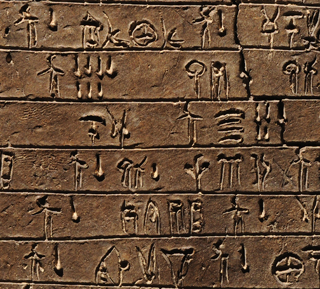
My sub-sub-specialty is Linear B, the script of the Greek mainland and Crete during the second half of the Late Bronze Age, roughly 1400-1200 BC. It’s an important little area for a couple of reasons. It’s the earliest evidence we have for the Greek language and some of the best evidence we have about the states that used the script. Among other things, it informs us about the prehistory of Greek language, religion, administration, economy, and society. It therefore has some broad appeal. But the community of scholars who work on Linear B is small and specialized, and most Classicists and archaeologists aren’t taught much of anything about the script.

So, as you might imagine, it’s a bit of a problem when scholars without specialized training want to dip their toes into the textual evidence. This is of course not a problem that’s unique to Linear B — the same problems present themselves when any scholar moves outside of his or her comfort zone and into a discipline or sub-discipline with which s/he is less familiar. But it’s especially true of Linear B because the number of specialized practitioners is few. And it’s exacerbated by the fact that the “bible” of Linear B studies, Documents in Mycenaean Greek (commonly abbreviated Docs), was published in 1956 — only four years after the script was deciphered! — with a second edition in 1973 (Docs2). This second edition, however, isn’t really a second edition. It’s a reprint of the 1st edition with ca. 140 pages of additional commentary written by Chadwick alone (Ventris died in 1956) appended to the end of the text of the 1st edition.

For whatever reason, many scholars outside the sub-field continue to rely more or less exclusively on Docs2. A new third edition is in the works but it’s unclear when it will be published — it’s been “in the making” for at least six years. The main dictionary of Linear B is written in Spanish as part of the Diccionario Griego-Español and isn’t commonly used (unfortunately; it is a scholarly masterpiece) and the authoritative Companion to Linear B, now running to three volumes, is also seldom used by non-specialists. Many of my non-specialist friends confess that they find the scholarly literature impenetrable, and that’s confirmed by the many mistakes contained in virtually every book that includes some discussion of Linear B written by a non-specialist.

For someone like me, this is a depressing situation. I don’t want to spend all my time complaining in book reviews about little mistakes, and I want to see the material I work on get the (positive) attention that it deserves. The field of Linear B studies, like so many academic sub-specializations, is largely turned in on itself and is focused on internal concerns. The first circular of the 14th Mycenological Colloquium (the main conference for specialists in Linear B and other Aegean scripts, held every 5 years or so in a different location) states that “priority will be given to papers that present new inscriptions or new editions” of texts: not exactly a central concern to the average Aegean prehistorian or Greek historian that constitutes the broader audience for our scholarly output.

What’s the solution? Honestly I’m not sure. This post has been more a venting of frustration than anything else. Maybe this isn’t a problem but something that is just endemic to modern scholarly and disciplinary boundaries. I can’t help but feel that scholars of the Aegean scripts haven’t done a good job of communicating what’s interesting and important about their research to a broader audience. Nobody’s written a book like John Chadwick’s The Mycenaean World — a Linear B-focused account of the Late Bronze Age aimed at a general audience — since it was written in 1976. That, more than anything else, is limiting the appeal and interest of our sub-discipline.
Political unity in the LBA?

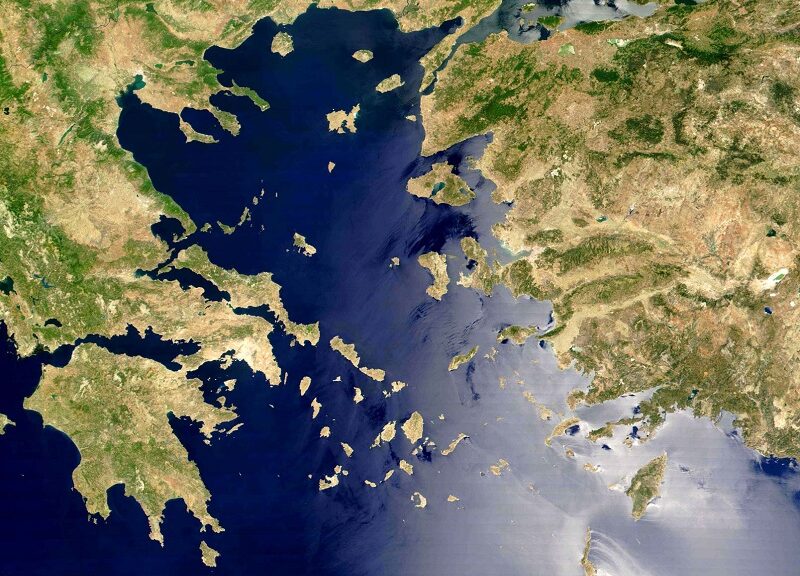
The ever-useful academia.edu (which now keeps asking me if I am interested in Roman Archaeology) brought to my attention an article by Jorrit Kelder entitled “Ahhiyawa and the World of the Great Kings: A Re-evaluation of Mycenaean Political Structures” (Talanta XLIV [2012]). The author argues in this paper that the Mycenaean world was unified into a single state ruled by a single king (the wanax) at Mycenae, while the other Mycenaean palaces were subsidiary administrative centers, each ruled by a local king (the lawagetas).

The spur for this argument, which runs totally against the grain of all Mycenaean scholarship, is the fact that in Hittite diplomatic texts, the region called Ahhiyawa (now located by Hittite scholars in the Aegean) is ruled by a “great king.” It is indeed interesting that our usual understanding of the Mycenaean world, i.e. that it is a patchwork of independent peer polities, is so different from the picture we get from the Hittite texts, and Kelder is right to identify this as an important question that needs resolution. His solution, however, is to accept the historical reality of the Hittite texts and then see whether he can fit the Mycenaean evidence into this picture.

In some ways, of course, that’s what we all do. We work from the evidence we know best to solve problems that they impinge upon, or we temporarily ignore a complex reality so that we can focus our attention on a particular problem (what Giddens calls “methodological bracketing”). The difference is the way that we go about treating the material we don’t know well but which is important to our argument.

In this case, the problem is the way that Kelder treats the Mycenaean material. For instance, we read that

The point that various large-scale infrastructural works (most notably the drainage of the Kopais basin in Boeotia, and the evidence for a well-developed network of roads in, especially, the Argolid) are difficult to reconcile with the modest amounts of resources and manpower that, according to the Linear B texts, would have been available to the individual palaces is usually ignored…

This is all we are told (no citations are given). It is not an unimportant statement, for together with the cultural and administrative homogeneity of the Mycenaean world, it allows that author to conclude in the following paragraph that “The argument for a politically fragmented political landscape during the Late Bronze Age thus seems to be based on assumptions, rather than facts.” It thus shoulders a great deal of argumentative weight.

Passing aside the administrative homogeneity of the Mycenaean world, which seems to me to ignore the context in which writing took place in LBA Greece (on which, see Kevin Pluta’s dissertation), this argument doesn’t hold. The author assumes that what is written on Linear B texts is congruent with (“according to the Linear B texts”), or at least indicative of, the total resources commanded by individual palaces. This is to misunderstand the nature of the Linear B texts and the processes whereby we have received them. The amount of labor recorded on the Linear B texts is indeed not very large, but it would be a mistake to conclude from this that the palace could not command large quantities of labor. As many scholars have pointed out, the Linear B texts heavily bias regular transactions, probably because those texts were less often recycled and reused. Thus we are much more likely to have evidence of annual or monthly transactions than ad hoc transactions. A good example of this is the fact that we have much more evidence for dependent groups of women and children at Pylos who are allocated monthly supplies of foodstuffs for their support than evidence for other short-term allocations of foodstuffs. Second, there is some good evidence that the palaces used multiple systems to recruit labor, including the use of intermediaries who were allocated large quantities of staples to recruit various laborers for palatial projects. So what we have in the Linear B texts are fragments of information about the labor that was certainly available to the palace, but in no way can we use this information to determine that the palaces didn’t have enough labor to, say, drain the Kopais or build a road 100 miles long, especially when neither has been adequately quantified.

Kelder makes the important point, and it is a correct one, I think, that it is a mistake to equate administrative borders with political borders (p. 4, bottom). On the other hand, he misrepresents what we know about the two main officials of the Mycenaean state, the wanax and the lawagetas. Although the contexts in which they are appear are similar, it is not true to say that (p. 5, top):

The numerous (and as far as I can see, unconvincing) attempts to make a clear distinction between the two officials, other than the size of their respective temenoi (at Pylos, the wanax’s is thrice the size of that of the lawagetas), clearly illustrate that there is no real consensus on the exact position and status of either of them.

Actually, there is a clear distinction between the two, which is demonstrated by a number of the secondary sources cited in this article. The adjective formed from wanax is wanakteros, which makes use of a Greek suffix (-teros) that indicates binary opposition (like Greek ἕτερος, “the other [of two]”), while the adjective formed from lawagetas is lawagesios, a regular adjectival ending. Thus it seems possible that the wanax is an important structural concept in Mycenaean Greek (at least among the administrators). There are other differences. The wanax appoints the damokoros, a regional official who administers one of the two main provinces of Pylos. He is thus directly involved in regional administration.

This much is consistent with Kelder’s argument that the wanax is the real king, whereas the lawagetas is a sub-king. But where is the evidence that the lawagetas is a “ruler-like figure”? This is crucial because the presence of two “ruler-like figures” is what Kelder finds so problematic about traditional interpretations of the Mycenaean political order. The answer is that there is no such evidence. The lawagetas appears in a number of important contexts, as does the wanax, but there is no evidence that he is a ruler-like figure. Why couldn’t he be something like the grand vizier, for example? This possibility is never entertained.

Also strange is Kelder’s reference to “two throne-rooms.” Here he elides the important difference between a throne-room and a megaron. The former is an interpretation of the function of a space; the latter is a designation of a particular architectural configuration. It is true that the rooms that we consider throne-rooms are megara, but it hardly follows that all megara are throne-rooms. In fact at Pylos, the lawagetas is not thought to hold court in the smaller megaron (room 23), but in Halls 64-65. It’s not certain what the other megara at Mycenaean palaces are for, but nowhere are the possibilities (except the one favored by the author) entertained.

Kelder’s put his finger on an important question, but although he concludes his article with the statement that “the growing body of circumstantial evidence for a unified Mycenaean state now seems overwhelming,” I am afraid that we are no closer to solving this thorny problem. That will require close, sustained engagement with the Hittite and the Mycenaean evidence.

Blegen’s notebooks from Korakou

This is the first post of a blog dedicated to my research interests, which center on the archaeology and scripts of the Aegean Bronze Age. The name of the site, Englianos, is the modern toponym where Carl Blegen excavated the “Palace of Nestor.” This site, which was called Pylos in the Late Bronze Age, is the source for some 1000 inscribed clay documents whose study formed the basis for my doctoral dissertation.

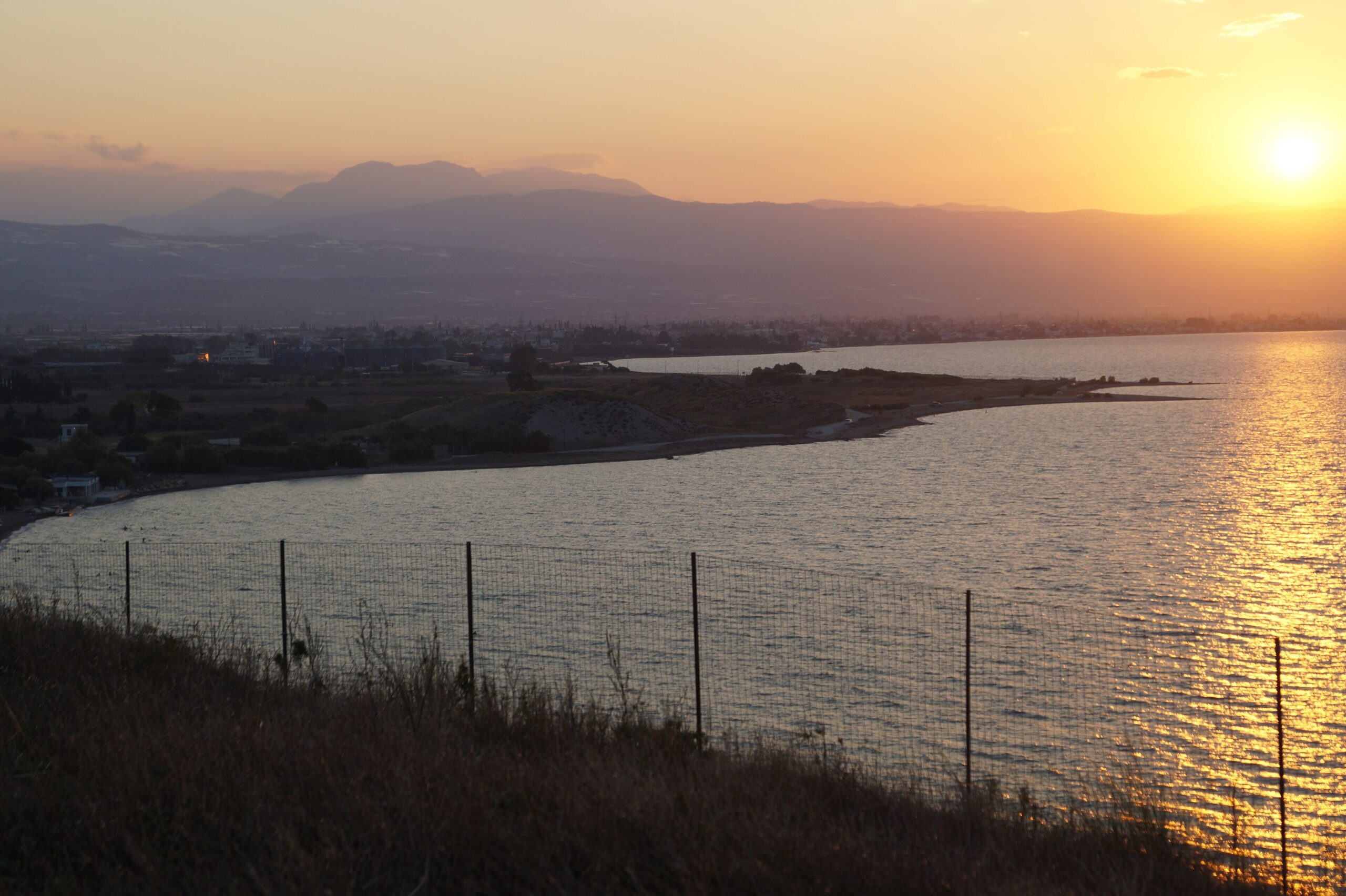
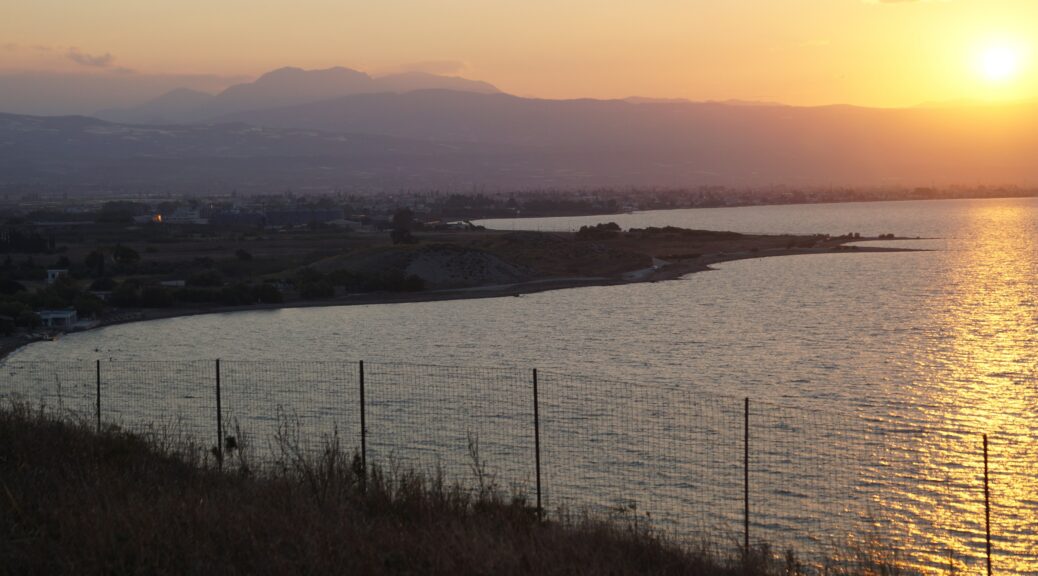
Corinth, Greece: View from the archaeological site of Korakou to the west on the archaeological site of Lechaeon

Prior to excavating LBA Pylos, Blegen excavated at a number of other prehistoric sites in the Peloponnese, one of which is Korakou. This site, located on the bluffs overlooking the Corinthian Gulf at the outskirts of modern Corinth, was excavated in 1915 and 1916, and formed the basis for Blegen and Wace’s ceramic chronology of the Greek mainland for the Greek Bronze Age.

Blegen’s excavation notebooks have been scanned and made publicly available by the American School of Classical Studies at Athens and the Corinth Excavations (among other things). As my colleague Bill Caraher pointed out in his blog (about two years ago!), these are a fantastic resource, but they are static. There is no opportunity for scholars to add metadata to the digital scans. As Bill put it,

as I thought about this I began to imagine a parallel site where scholars could upload their transcriptions of notebook pages. These would be keyed to the stable urls provided by the American School and presented in a wiki which would allow for and track revisions. I am sure that some notebooks are useful enough and commonly investigated enough to warrant this.

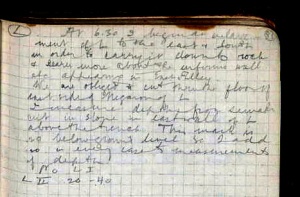
I think that Bill is right, and I wanted to provide here a small example of the kind of thing that he envisioned, using Blegen’s Korakou notebooks as an example. As Bill noted, Blegen’s handwriting can be difficult to read. Transcriptions of all the Korakou notebooks were made in 2005 by myself and Sarah James, and could provide a valuable resource to scholars working on Korakou. We are not the only scholars who have made transcriptions of the Korakou notebooks, however. Others who have worked with the Korakou material have also transcribed sections for their own work, and in some cases there are discrepancies between their readings and ours. In Notebook 84, p. 81, Blegen writes (on my reading, based on autopsy):

I measure depth from semadi cut in stone on east wall of L above the trench. This mark is .20 below ground level so I add .20 in every case to measurements of depth.

This differs from the reading of Jerry Rutter (also based on autopsy, published in his 1974 dissertation, p. 108):

I measure depth from [?……?] cut in slope in east wall of L above the trench.  This mark is .20 below ground level so I add .20 in every case to measurements of depth.

Below is the image of the passage in question. I’ve increased the contrast so that the writing is more clear, but you can see the original scan here.

NB84_p81

This difference in readings is somewhat significant for how we understand the archaeology of Korakou and indeed Blegen’s methods in the field. Rutter goes on to argue, based on his reading of this passage, that (Rutter 1974: 108-109)

Not too much credence should be given to Blegen’s depth measurements…since the ground level to which these measurements refer no longer existed and had to be estimated at 0.20 above some obscure “cut”. It is quite possible that Blegen began his…sounding at ca 0.40-0.50 below ground level, the level of the earlier floor which he had uncovered on 19 June.  In this case, the uppermost wall in the sounding would have appeared not at 0.60 below ground level, but at 0.80-0.90, roughly the level of the bottom of the LH IIIB 1 fill on which House L was built.

If, on the other hand, we use my reading of Blegen’s notebook, then the measurements were taken from a mark (semadi is a transliteration of the Greek σημάδι) cut into a stone. This stone belongs to a wall of House L, and the tops of these walls are, as Blegen notes, 20-30 cm below ground level (Corinth NB 81, p. 220). Thus his measurements are reliable. And this potentially changes Rutter’s interpretation of this area, as Sarah James and I noted in an unpublished report that we submitted to Corinth Excavations in the summer of 2005:

Rutter suggests that Blegen’s enlargement of [Trench] L began at ca. 0.40 m below ground level, where he exposed an earlier floor. However, Blegen only exposed this floor “in the southern part of the Megaron,” and his enlargement of the pit in L is “to the east and south.”  It is likely that the southern part of the Megaron is roughly equal to the area south of the pit in L, which cuts diagonally across the northern half of the main room of House L (the Megaron).  However, the enlargement of the pit in L extended to the south and east, and to the east of pit L Blegen apparently had not dug down to 0.40.  Thus, L II probably represents an operation taking the enlargement down to 0.40, and then L III included both the eastern and southern parts of the enlargement.  As the eastern part of the enlargement is directly west of the eastern wall of House L, it makes good sense for Blegen to use the wall as a benchmark from which to measure depths.

In short, this means that Blegen does reveal a wall (with L III, NB 84, p. 127) whose top is only 0.60 m below ground level.  This is problematic for Rutter’s reconstruction of this area, specifically his argument that the “habitation level” revealed at a depth of 0.80 in the East Alley, and the “floor of hard earth” at a depth of 0.80 in Trench L (NB 81, p. 375), represent a terracing line for a fill of LH IIIB:1 date upon which House L was built.  Perhaps the “habitation level” at 0.80 is actually a floor associated with the construction of a building (represented by a wall whose socle rises 0.20 above its floor), which was then covered by the same LH IIIB:1 fill.

My primary interest here is not the interpretation of the area around House L at Korakou. Rather, it is that while static publications of excavation notebooks are invaluable, they do not (as they might) capture the scholarly arguments that build on these notebooks. What the American School has done — making a vast quantity of scholarly materials publicly available on the web — is laudable, but the next logical step is to turn these static materials into a dynamic scholarly space. A parallel wiki on the Corinth notebooks such as Bill and I are suggesting would allow scholars to add value to the static scans in a way that would benefit students and scholars of Greek archaeology for years to come.

[Originally posted to englianos.wordpress.com on 26 December 2012]